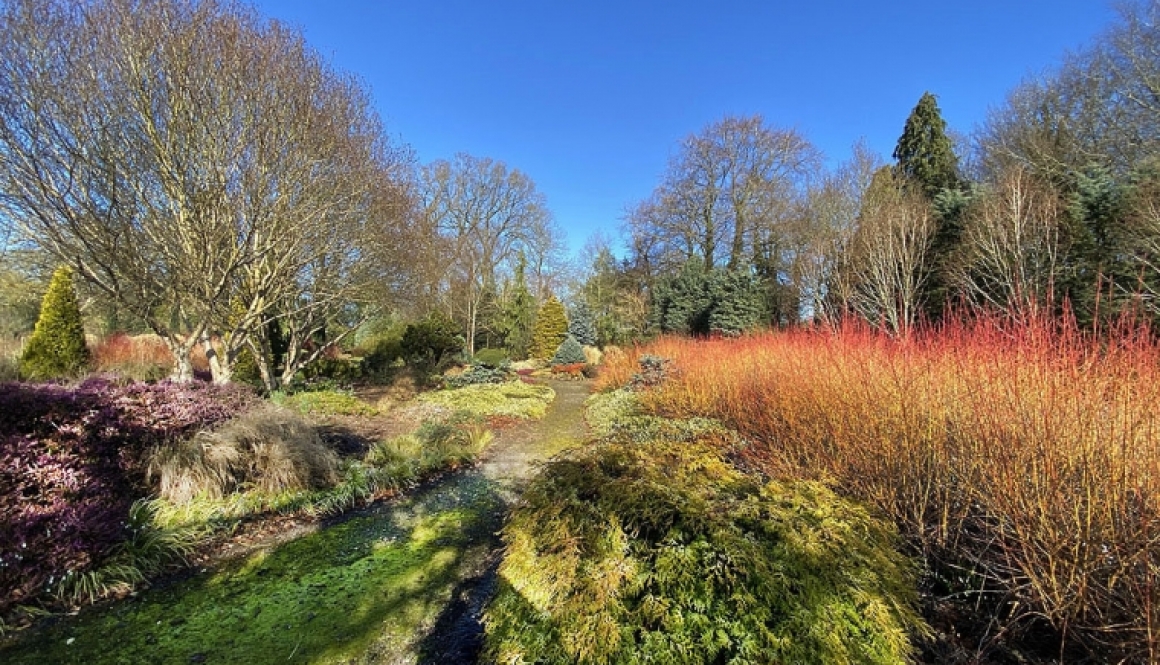
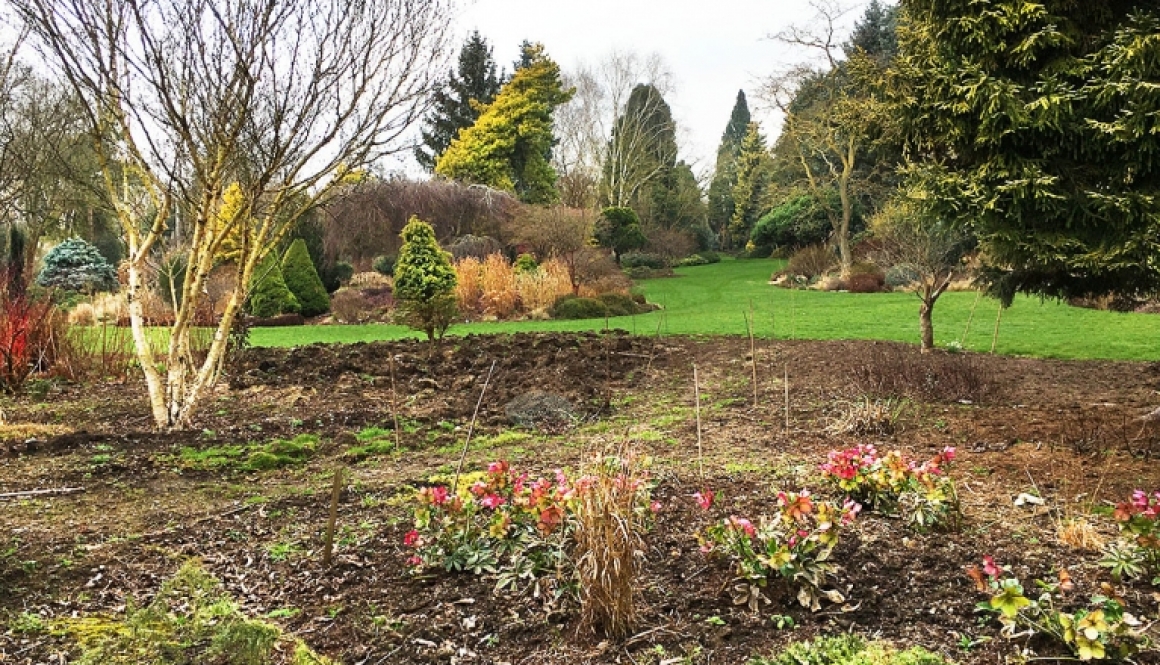
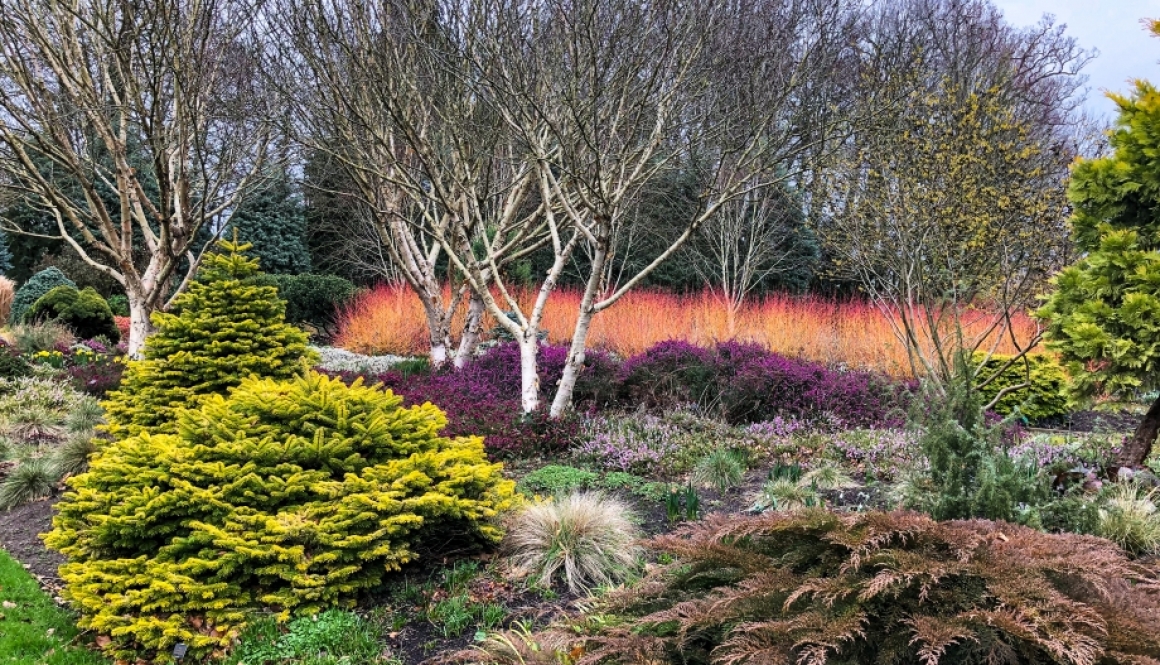
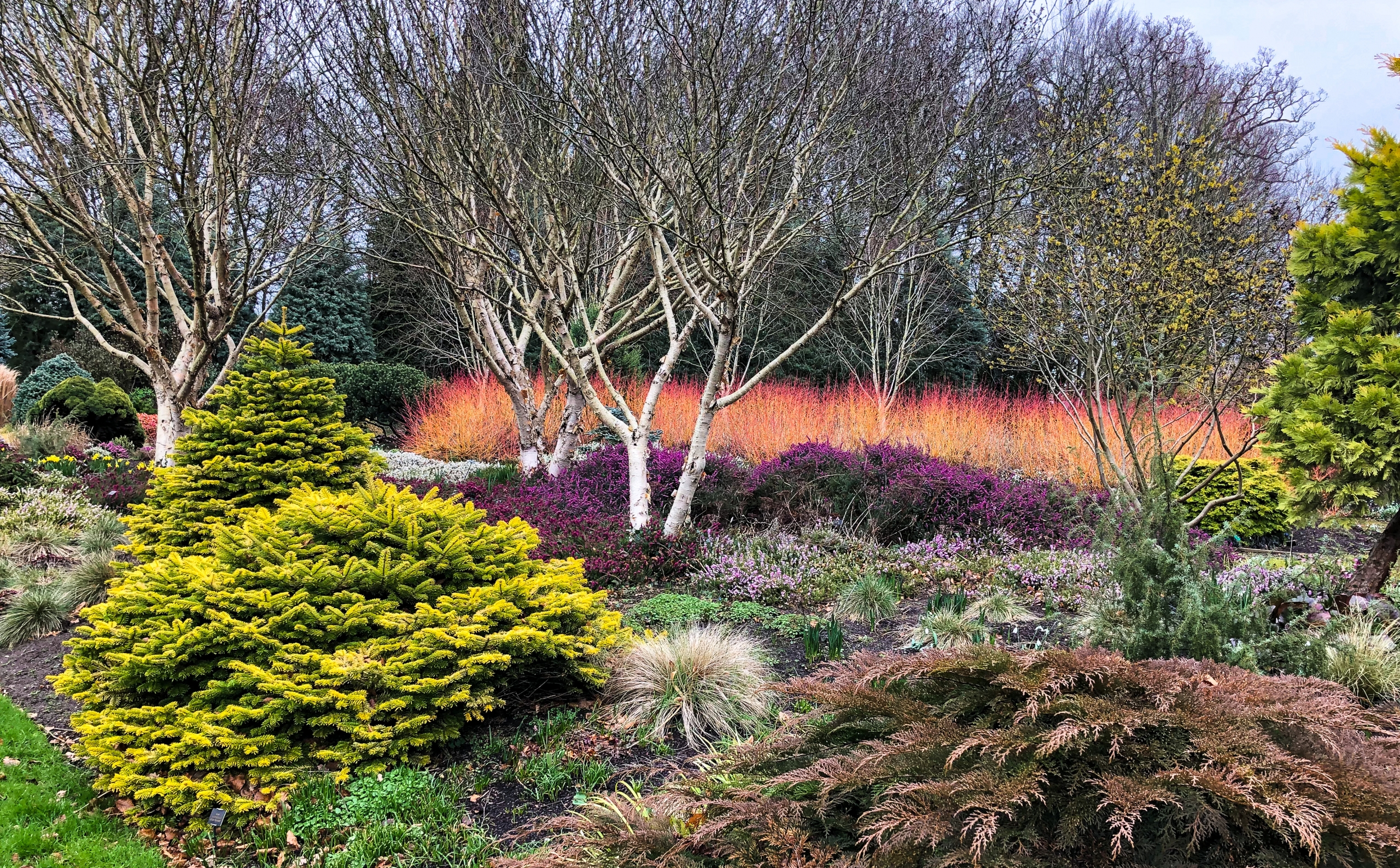
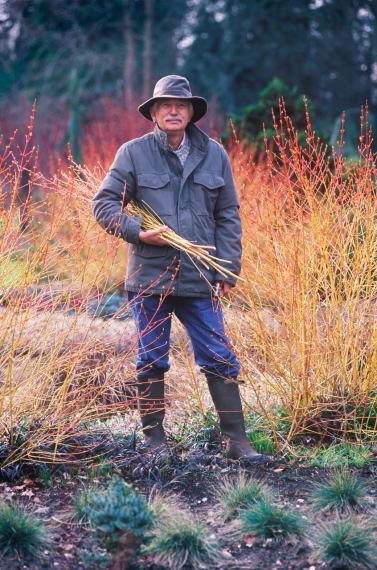
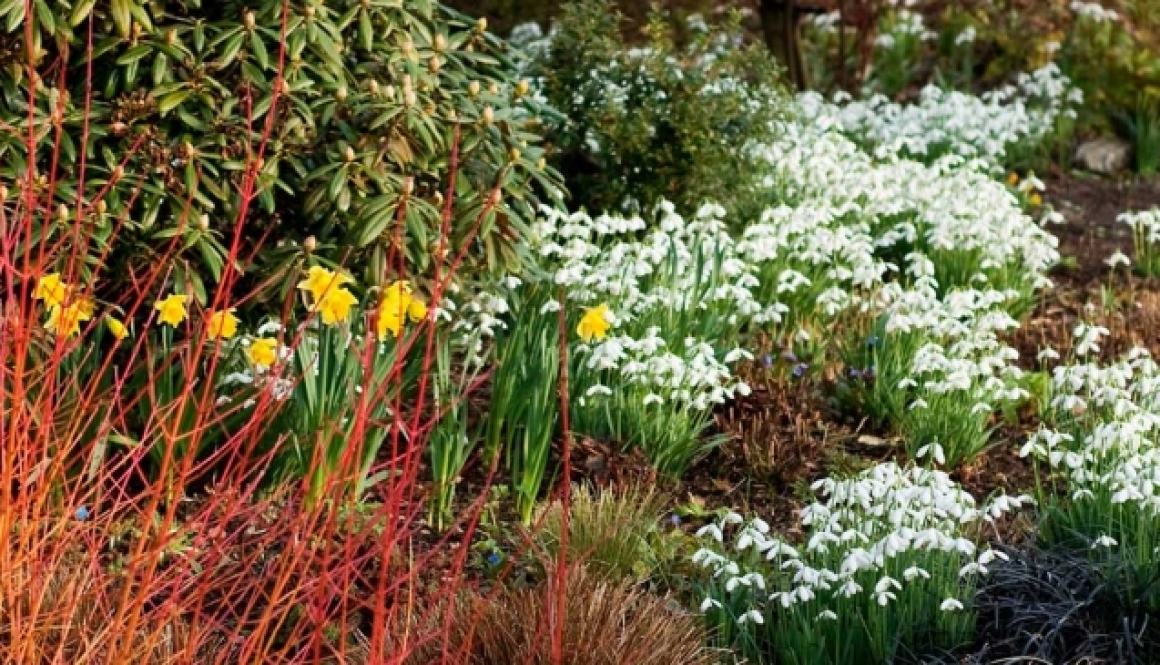
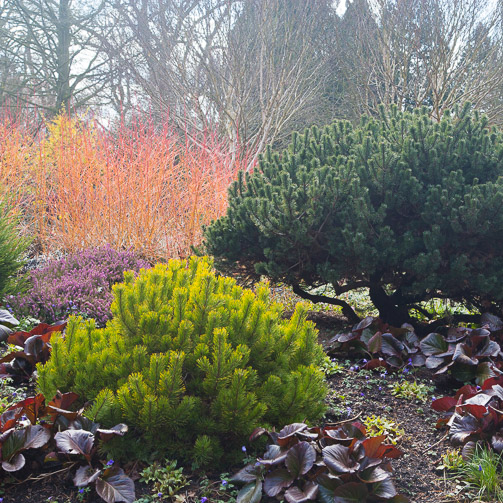
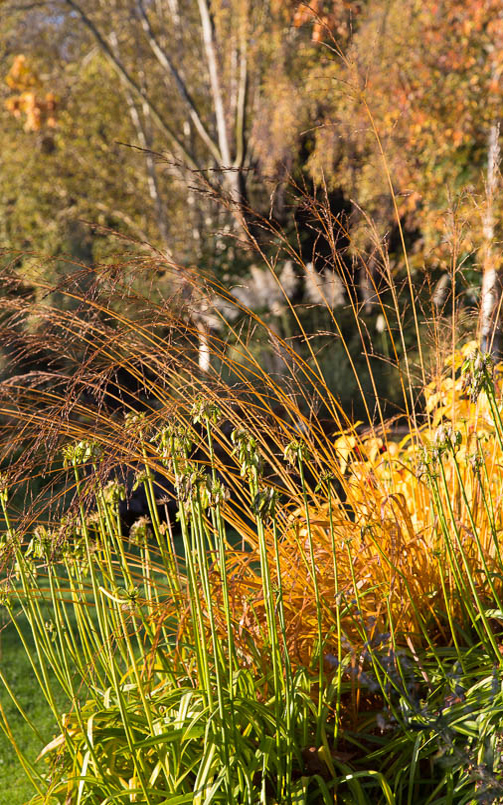
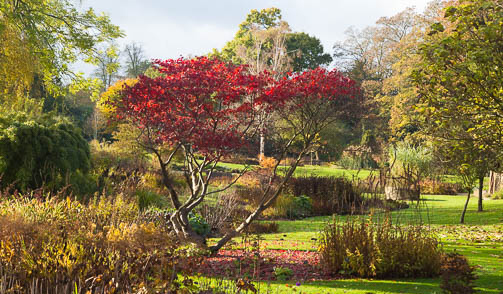
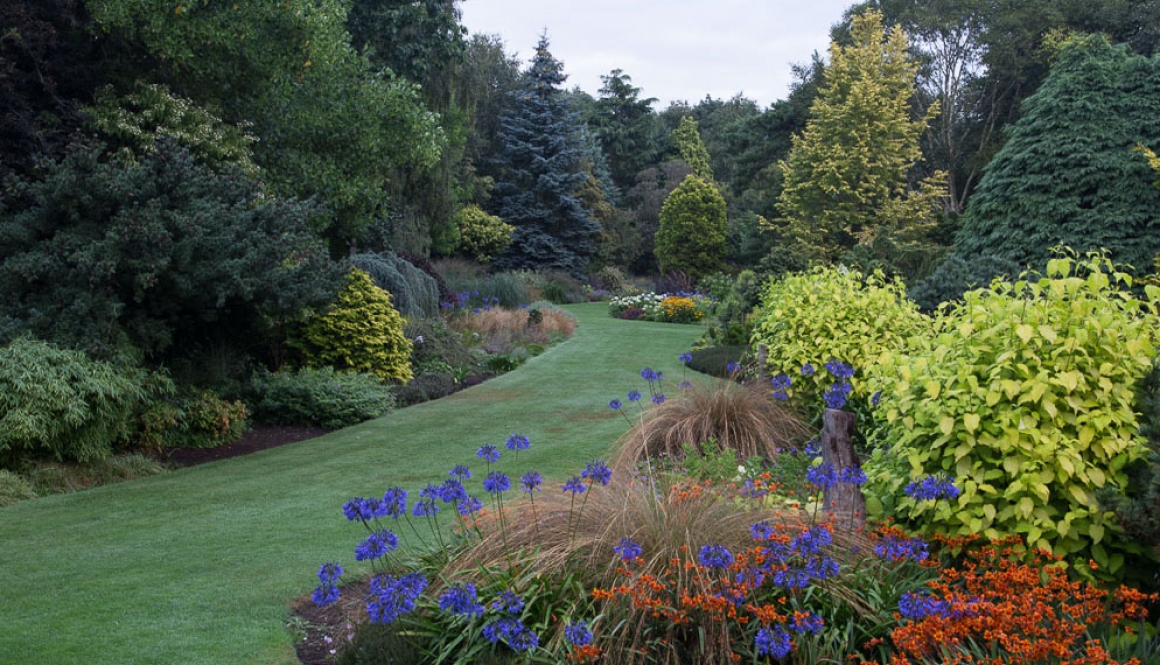
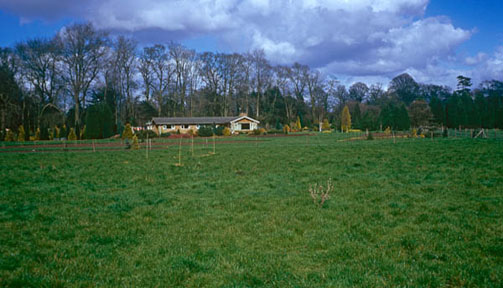
We are delighted to finally be able to open the gates to the gardens now on the 27th March, along with the Steam Museum. Whilst we would normally welcome visitors to the Winter Garden from early February, there is still plenty of colour to be seen and until will cut the Cornus sanguinea ‘Midwinter Fire’, that can also still really be enjoyed.
To pre-book tickets, please follow the link here to the Bressingham Steam Museum page.
For more details of our regular opening times and entrance fees, please go to Visit Us
As usual our plant nursery is busy producing plants and the shop is open for business whilst preparing for the spring rush! Please visit our Our Shop
An ambitious plan is being put in place to get a major project achieved this spring in Adrian Bloom’s garden, Foggy Bottom here at Bressingham.
In the 1970’s, Adrian was instrumental in popularising conifers and heathers which were such a feature in Foggy Bottom and many people’s gardens. In recent years heathers in particular have gone out of ‘fashion’.
Adrian believes they still have a place in the garden . They are relatively trouble free, give weeks of flowers from February to April, and are beloved by bees. Some of the original heathers planted 50 years ago are still performing well. Now Adrian wants to make a feature in an area largely hidden from public view until now. Known by him and the gardeners as ‘The Secret Garden’. So secret, that no visitors realised it was there!
Since the gardeners at Bressingham have been on furlough and when at work primarily manage the maintenance of the 17 acre Bressingham Gardens, it would have been unlikely that this project could happen this year. The ‘ambitious plan‘ therefore would hopefully appeal to professional and trainee gardeners in Norfolk and Suffolk. They would work together as a team for a few hours a week (Saturday mornings) on a voluntary basis, to get this presently static project prepared, planted and completed. This would offer an opportunity for gardeners to work with owner and gardener Adrian Bloom, and others…and be part of an excitingtransformational project, as well as adding to their experience.
HERE IS THE PLAN…
WHEN? Starting Saturday March 20th (provisional date) at 9 am to finish at 12.30 pm
Depending on numbers involved, it is expected to take 3/5 weekly sessions to complete.
WHERE? Foggy Bottom Garden, Bressingham, Norfolk
WORK INVOLVED? Digging out a few trees, shrubs and perennials, adding composted bark, preparing areas for planting. Lifting 3 year old clumps of heathers and planting as laid out by Adrian. Moving and planting some conifers, planting snowdrops, and finally mulching with pine bark.
Please note: most of this will be hand work (and possibly hard work!) If you have, please provide your own tools (spade and fork initially).
IN RETURN? A CHANCE TO LEARN MORE ABOUT PLANTS! For those who volunteer, Adrian will give a guided tour of the gardens in July/August and another in late Sept/October.
If this is of interest please contact Josh Tye joshtye@hotmail.co.uk Horticulturist at Bressingham Gardens and assistant to Adrian Bloom for this project. PLEASE PROVIDE DETAILS OF EXPERIENCE, KNOWLEDGE AND INTEREST IN GARDENING when contacting Josh.
Join Adrian Bloom on his first Zoom Talk on ‘The Winter Garden through the Seasons’ 17 January 2021 at 4 pm London time.
Being one of the first gardeners in the UK to develop an All Seasons garden with strong winter interest, Adrian Bloom will talk us through the importance of seasonal transition in and out of winter aided by the beautiful pictures of his Winter Garden. The talk is free – book your place here.
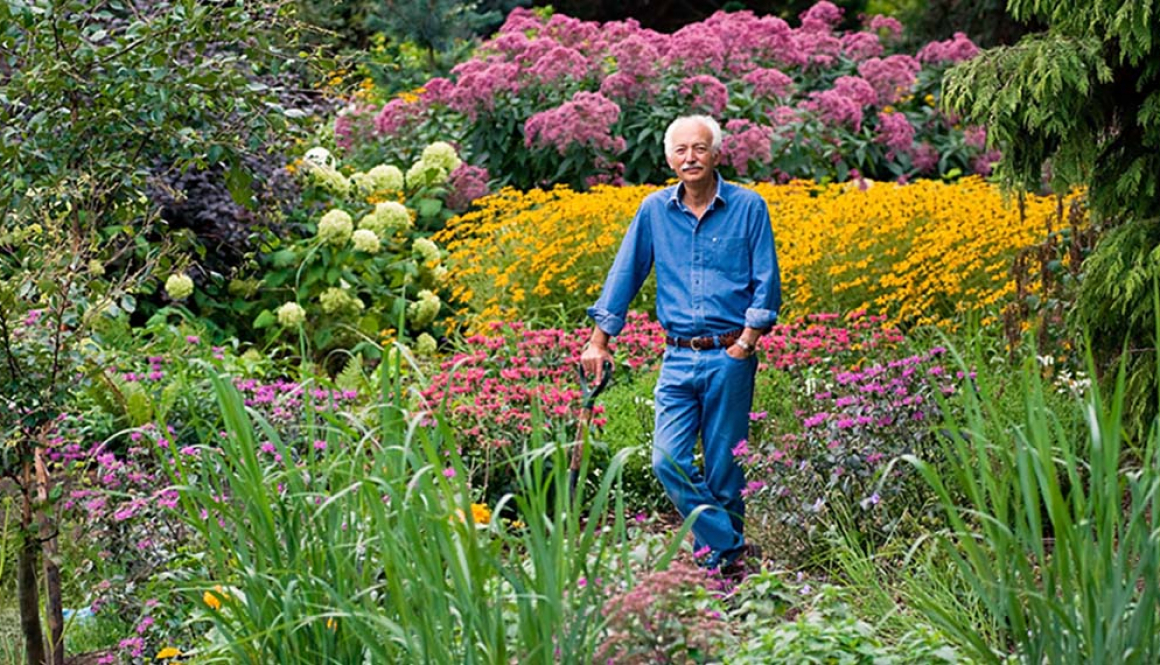
Portrait of Adrian Bloom in the Winter Garden at The Bressingham Gardens, Norfolk, UK in February 2007.
I had been coming to Bressingham gardens as a visitor on my summer Viaggi Floreali garden tours since 2018, each year promising myself I’d be back in winter to enjoy what, even the summer, could be perceived as a treasure chest of scenes and emotions. Earlier this year in February we organised an East Anglia Winter Garden tour and finally had the wonderful opportunity to see the gardens in all their winter splendour. As it turned out, this Winter Garden trip was the first and last trip of the year as we were all locked down on day after we returned to Italy.
Betula apoiensis ‘Mount Apoi’ winter garden earlier in October
As a small Tour operating company specialising in garden tours, mainly in the UK, I had to cancel the 30 sold out trips for 2020, and was left with plenty of free time and energy to spend elsewhere. The first month of lockdown was actually quite pleasant, but as time passed and the realisation struck that I would not have been able to work at all, I have to confess I felt lost. Having no purpose nor the certainty of when things would go back to normal made it impossible to plan anything. I am pretty sure this must have been the same for most people in similar situations. One things I had clear: I love gardens, due to my travels I had not been doing much gardening at all in the past few years and thought this would be the perfect time to do more, learn more and possibly be of help to someone. I sent my application to Adrian Bloom hoping he’d need a volunteer for a month. It turned out that the gardens had been locked down too, the gardeners partly forloughed and my help was very welcome. I felt I had purpose. As soon as flights from my town resumed in July I came over.
Adrian’s Wood with giant redwoods as a backdrop
Spending a month in a 17 acre garden, being able to witness the daily evolution of plants, the seamless succession of attractive features given by blooms and foliage over time was a new, enveloping experience which made me want to come back and see it happen over the Autumn and into Winter.
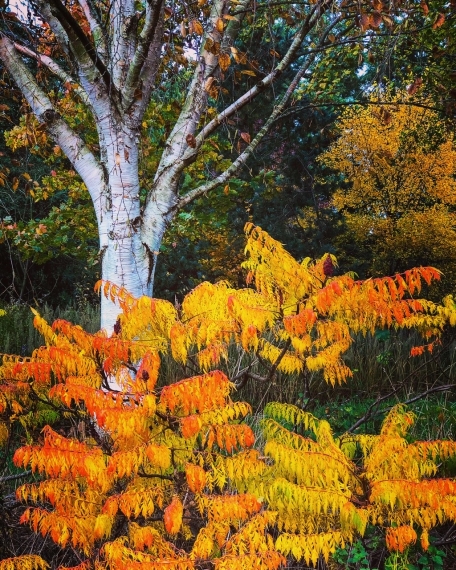
My expectations have been largely exceeded by the colors I found upon arrival. The winter garden possibly offering the most spectacular displays in early October with the Betula apoiensis ‘Mount Apoi’ contrasted by the rich variety of conifers, grasses and heathers.
But what stuck me the most was walking through a part of the garden which in summer I felt more like a link between the two main gardens being the Dell and Foggy Bottom. In the summer Adrian’s Wood was predominantly green, a lovely dappled shade, with little colour. It felt almost a necessary feature to calm the senses after the intense arousal given by the Dell’s bright colours, before entering a whole new dimension at Foggy Bottom. A very clever feature indeed, and very pleasant in the hot Summer days.
Adrian’s wood is essentially a garden planted with native North American plants – a land the Blooms have had a long lasting both professional and personal relation with.
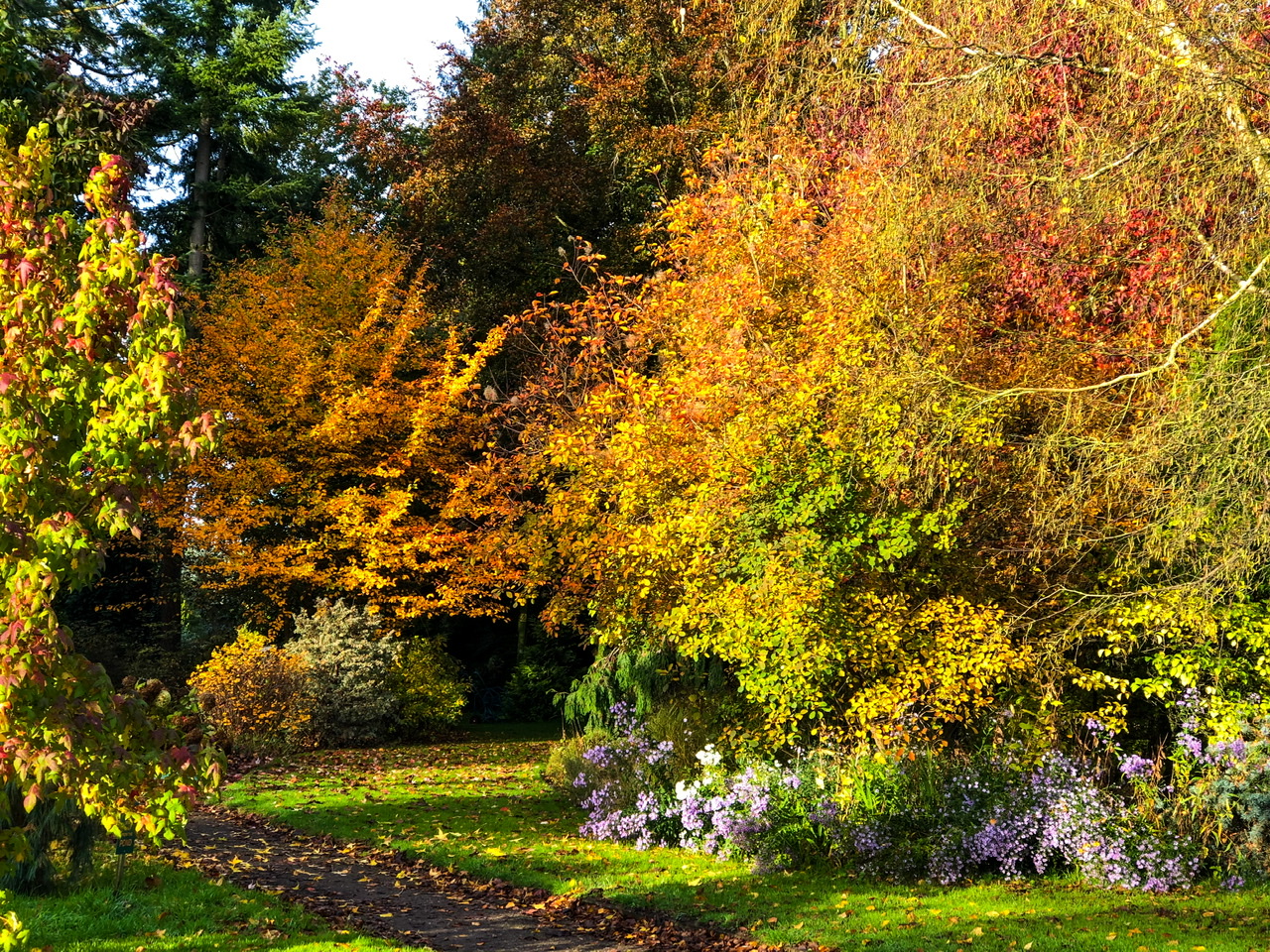
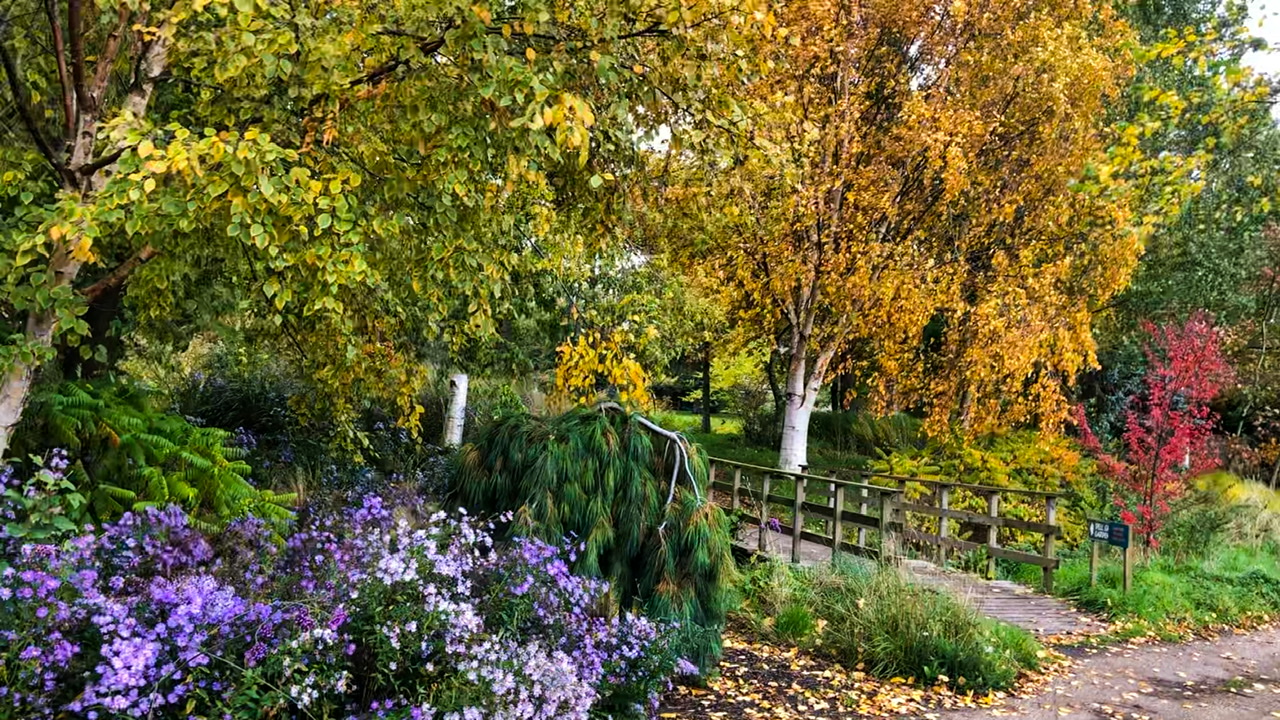
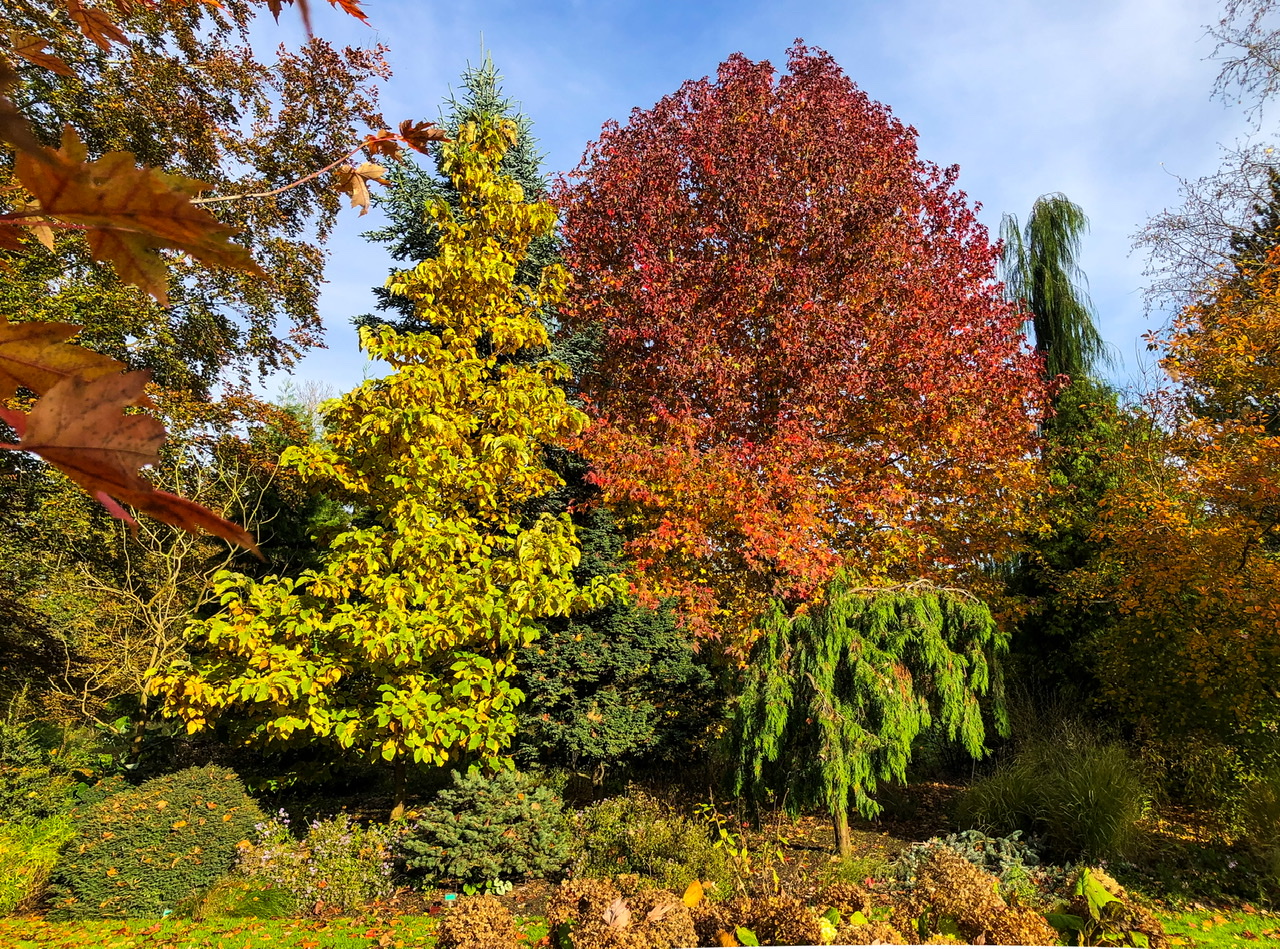
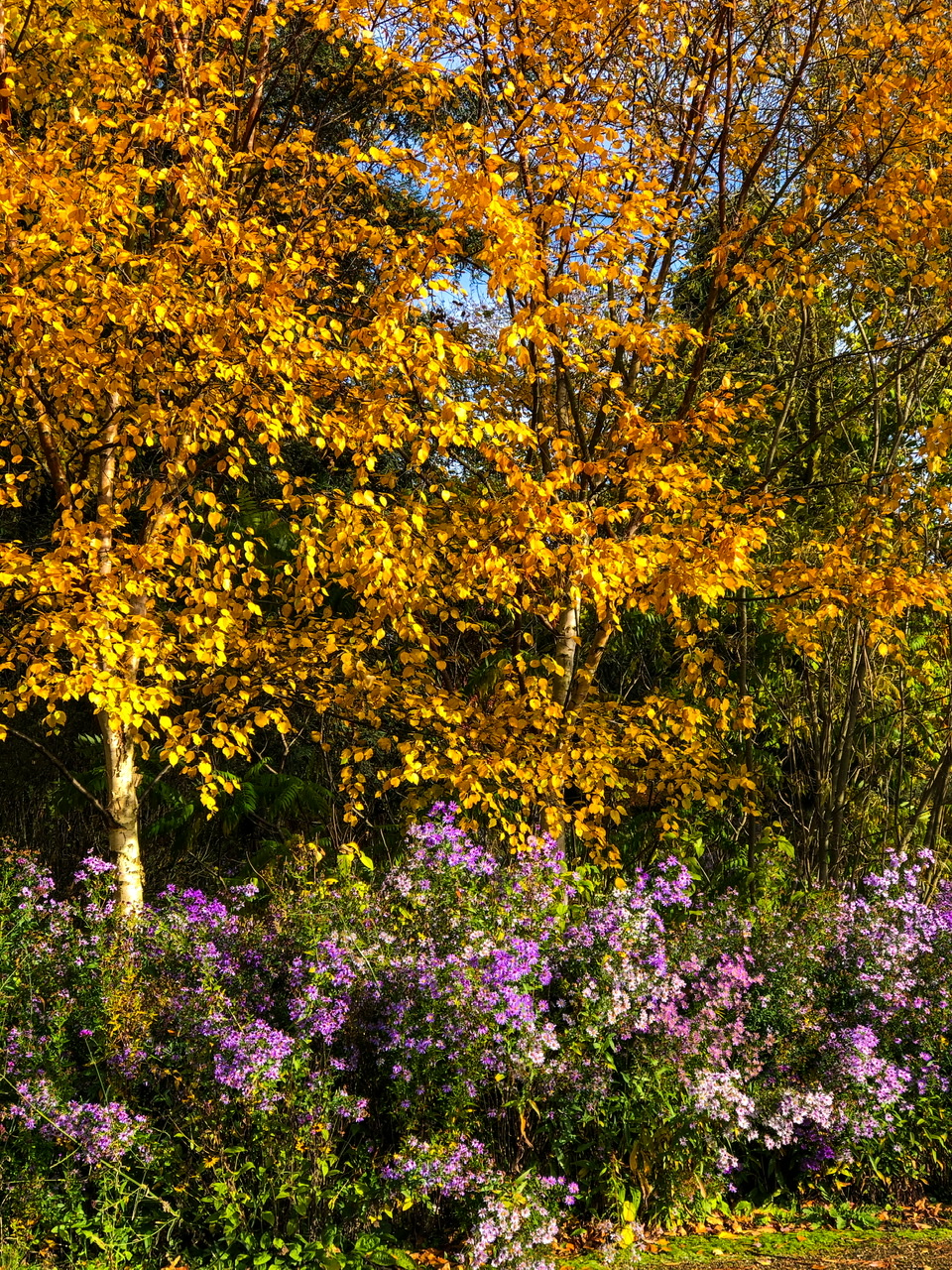
The tall towering giant redwoods to the North offer shelter from the winds and serve as a backdrop to the flaming hot colours of today’s main players: red and purple heart shaped leaves of Cercis canadensis ‘Forest Pansy’, a bright yellow Nyssa, a vivid orange Cotinus coggygria, an imposing burgundy Liquidambar, an impressive 5 metre tall curtain of Vitis coignetiae. On the south side the wood is bordered by a line of bright yellow Betula papyrifera St. George underplanted with masses of light blue Michaelmas daisies (all seedlings of American asters the likes of A. ericoides, A. laevis and A. cordifolius) on the west side of the path and Rhus typhina on the east. It is rather special to be walking through this tiny wood and being surprised with different colours at every turn of the winding path.
Autumn offers such a rich experience for all our senses. The winds blowing through the dying leaves, the wonderful scents like cercidiphyllum japonicum and fungi, the soft layer of cracking leaves under your feet, the bright colours and the realisation that it is all so ephimeral.
Ah, the most wonderful discovery of all? Adrian’s wood is a Spring paradise as well – I can already see the leaves of plants that will strike with their beauty after the Winter…. and … I will want to be here to see it in person.
Cotinus coggygria at Foggy Bottom
Nyssa, Acers and asters carry on into November
garden in the Autumn
Beautiful texture and colour in the Summer/Winter garden
Detail view in the Dell
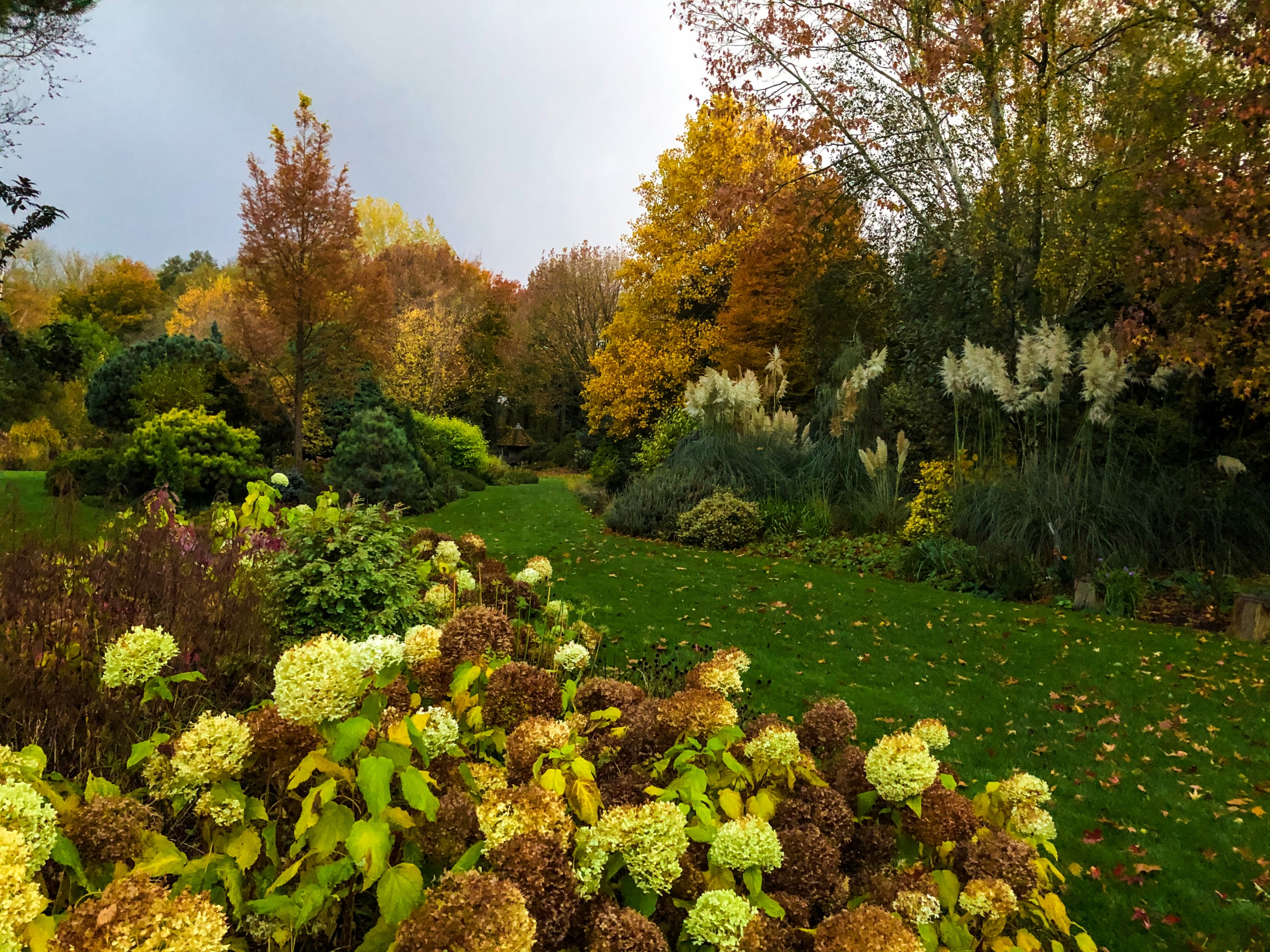
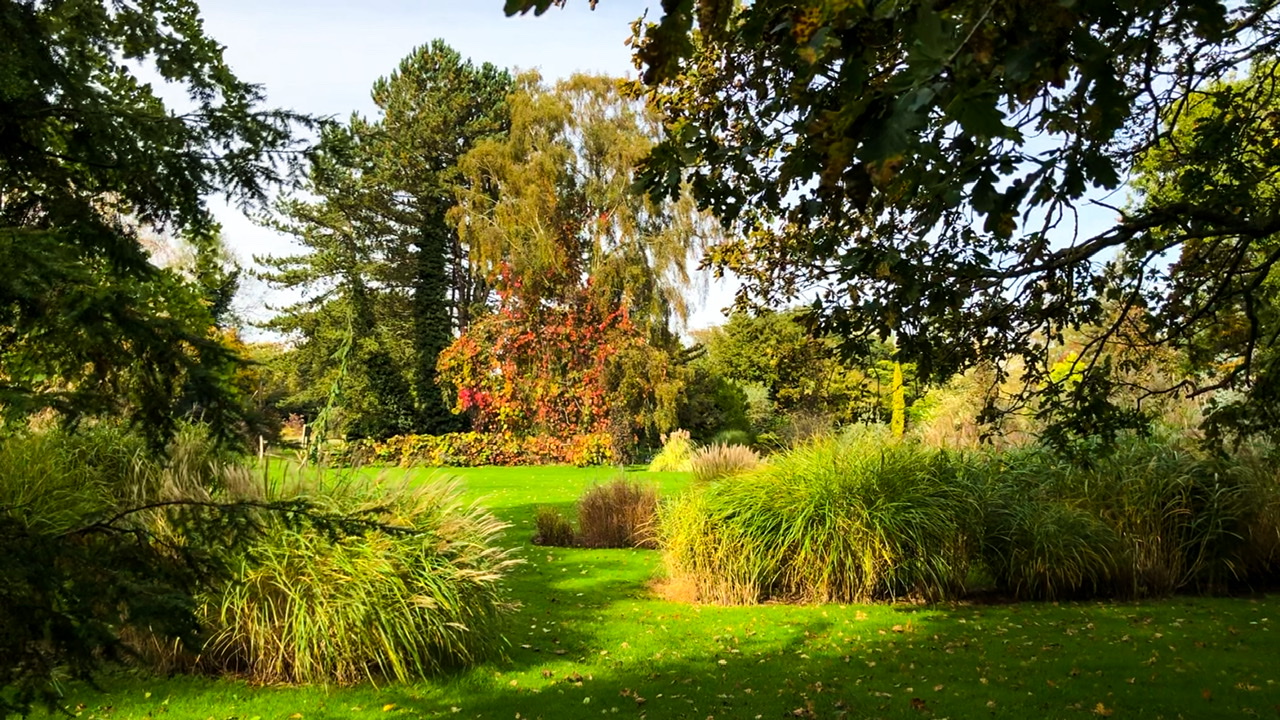
The gardens in Autumn
Vitis Coignetiae
Beautiful Crataegus prunifolia
The best colours of Adrian's Wood
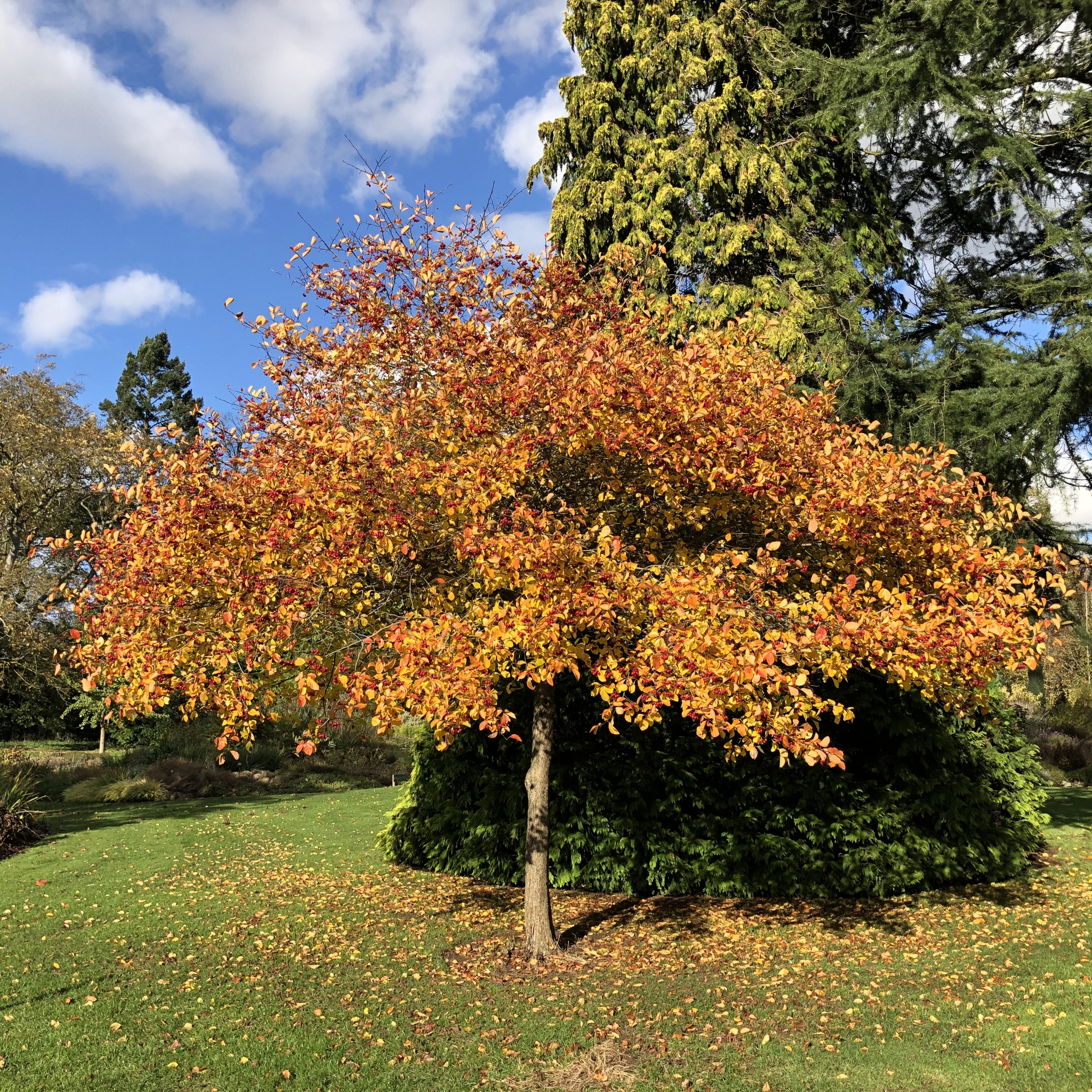
Cornus 'Midwinter Fire' in its autumnal amber splendour
Taxodium distichum at Foggy Bottom
The last of Rudbeckia goldsturm in Adrian's Wood
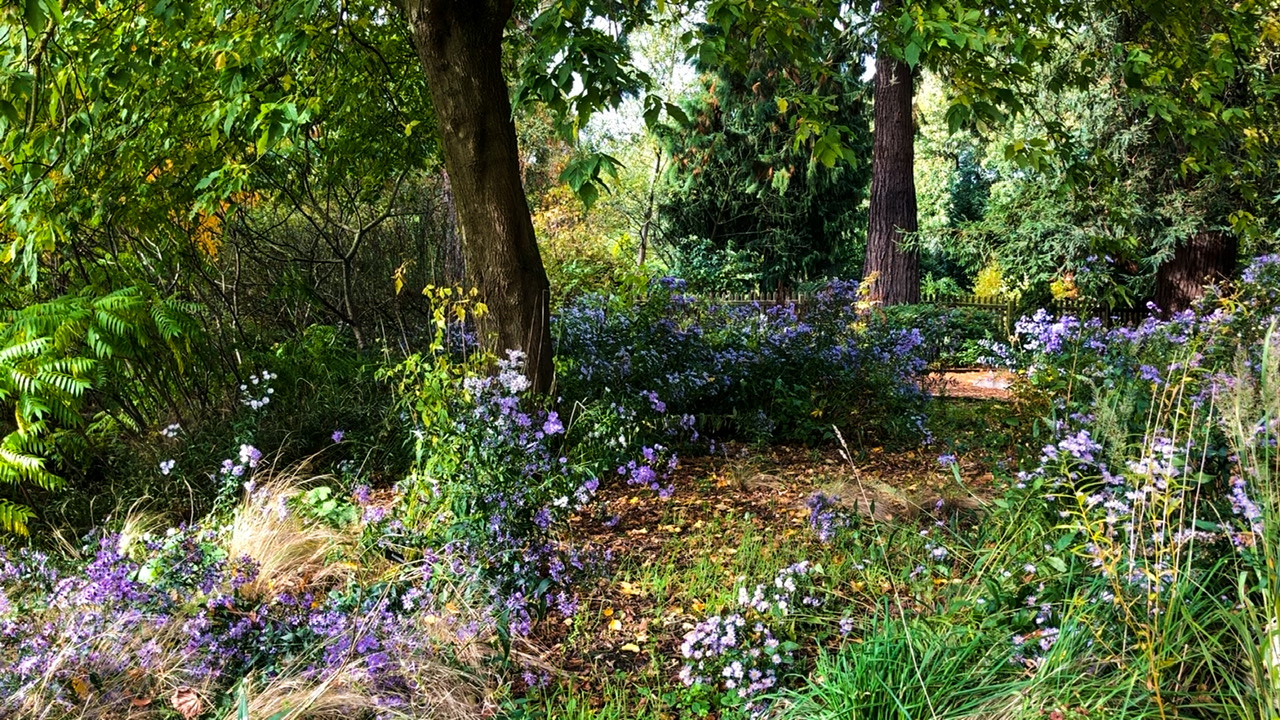
Asters in Adrian's Wood
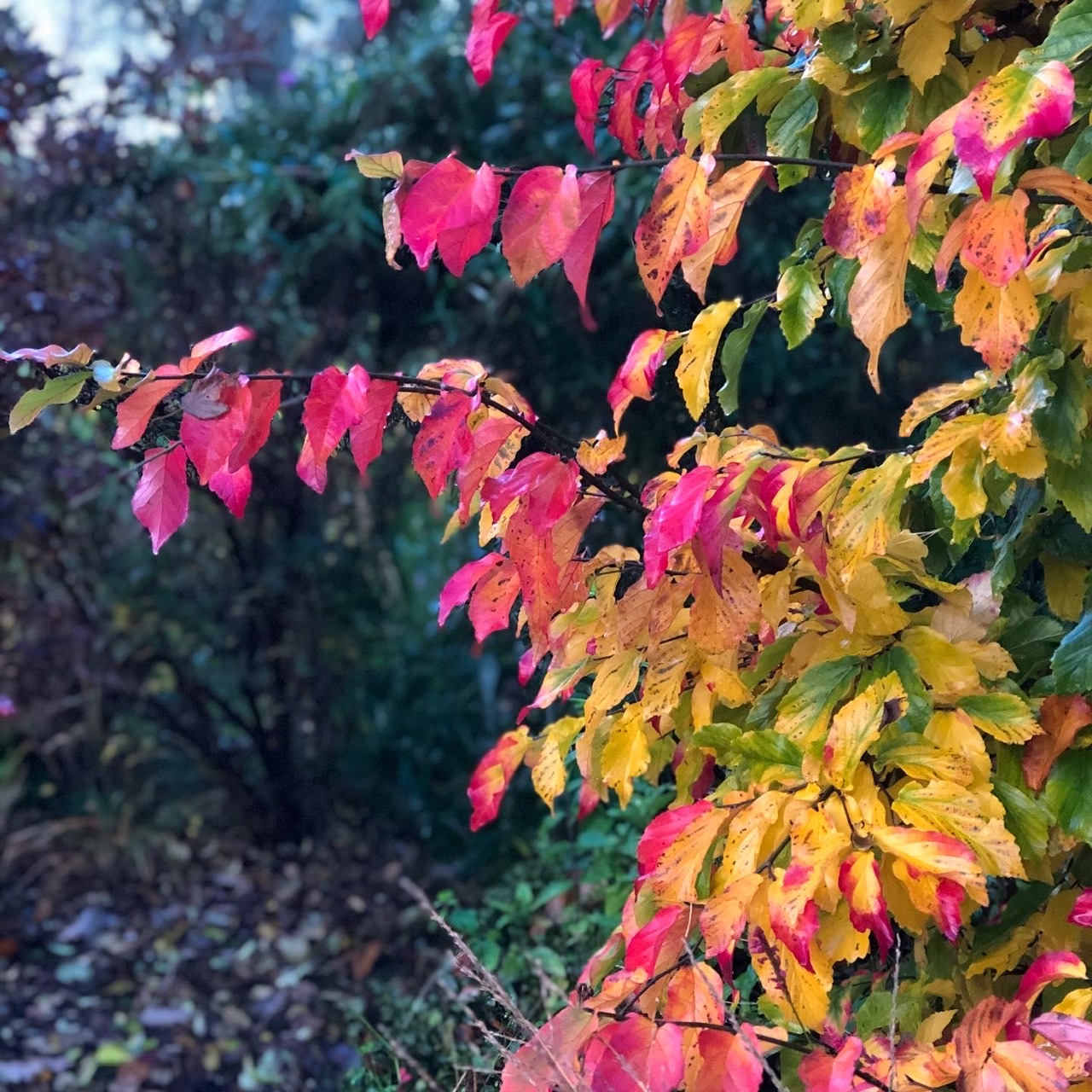
Parrotia persica
the gardens
Adrian's Wood understorey planting
First glimpses of color in early October
Nyssa at sunset in Adrian's Wood
Burnt orange to mahogany nuances on this Liquidambar
Evening Autumn sun on the Betula
Redwoods peaking behind Adrian's Wood
Relaxed atmosphere after the rain at Rosemary's Wood
“Nothing is quite the same” will be the comment from many, following the coronavirus pandemic. We all know it is not over and as garden centres and shops open up, caution still has to be followed by the management, owners and the public. Last weekend the first tentative steps were taken in opening the 17-acre Bressingham Gardens for the first time since March.
The first entrants were there at the 11am opening time, Sarah Banks with young son Albert, and even younger baby Florence. Like most early visitors, Sarah was desperate to get out in a pleasant environment and, recently moved to Banham, this was her first visit to the gardens.
“This week has been steady”, said Adrian Bloom, Chairman of the Bloom family business, who own the gardens and are responsible for maintaining them. “With our garden staff away for 6 weeks this spring it is amazing the gardens are in such good shape and of course has been relatively easy for people to abide by the social distancing rule of two metres. We are very happy to welcome visitors, and whether you are a keen gardener or just glad to be in a beautiful environment for a few hours is immaterial, the gardens continue to change through the seasons and offer an interest and refuge to all”.
It seems we are all, if lucky enough to have one, appreciating our gardens and plants more than ever. We have been pleased to get some rain, but news is still not great with the continuing Covid-19 situation. We thought this week we could widen (or narrow) our main focus on garden plants that also do well in containers. You need only a small garden or patio to enjoy some of these plants.
Matt and Adrian put together the following videos to bring something more personal to the project.
All of the plants in the above videos are currently available from the Bressingham Gardens Nursery. We imagine most of you have access to pots and potting compost; if not, you may be able to purchase these online.
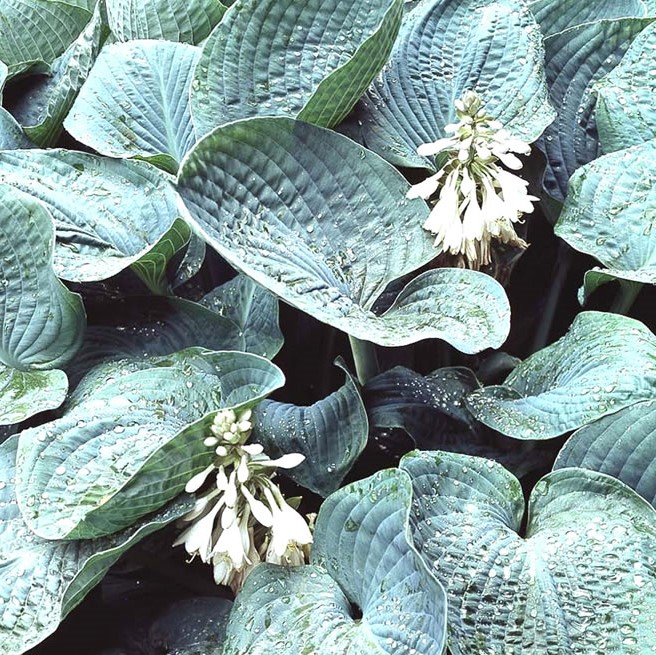
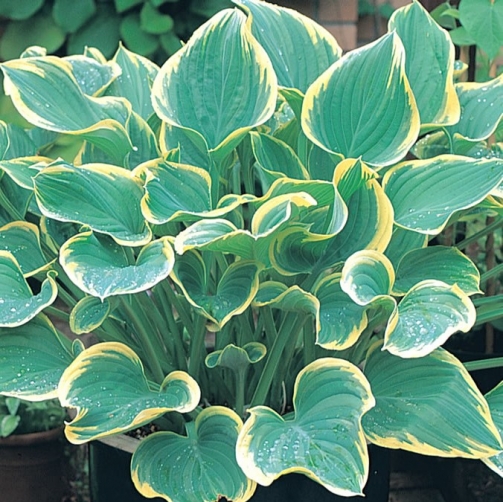
We use and recommend organic slug and snail repellent to protect hostas.
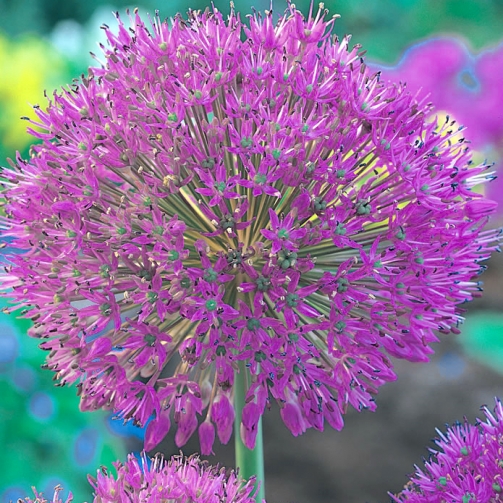
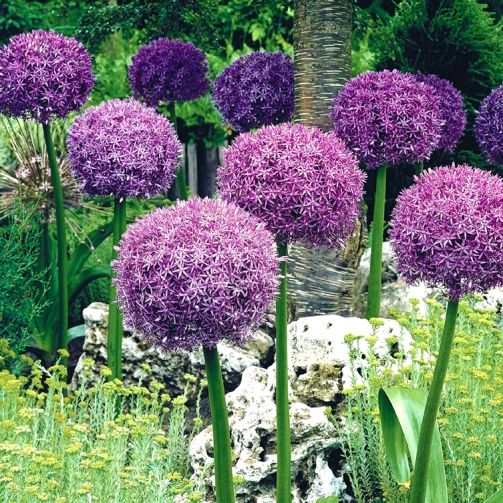
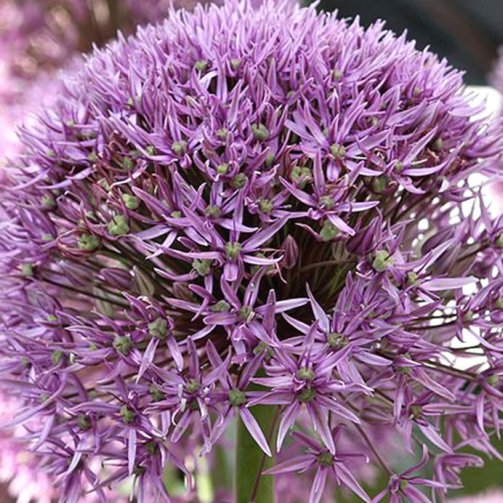
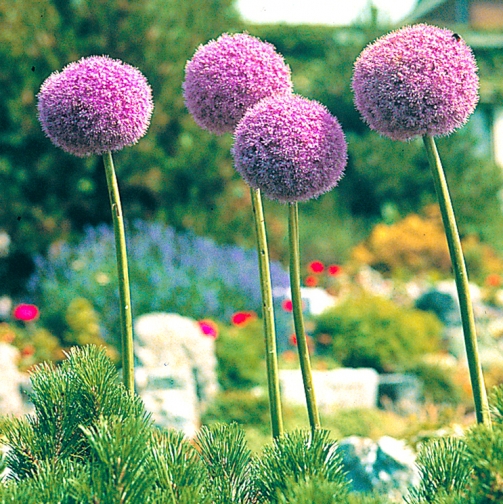
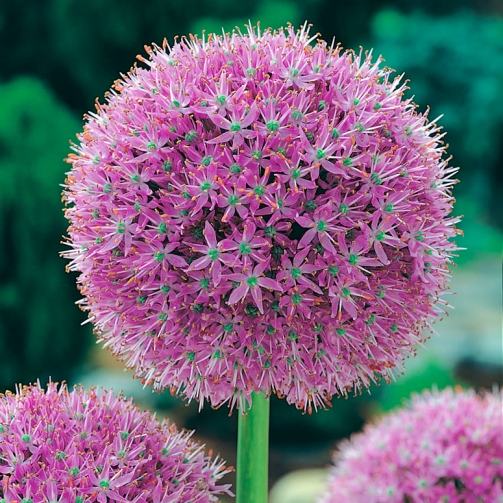
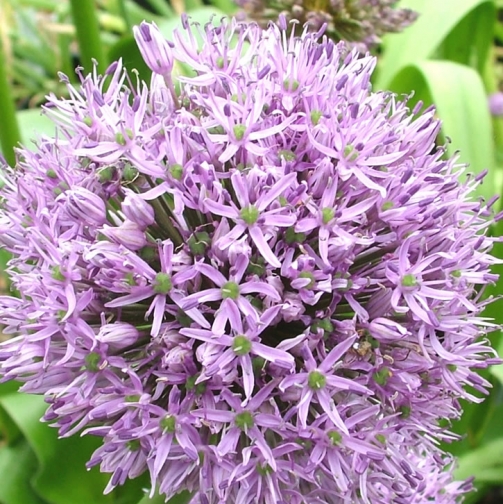
Add drama to your garden with spectacular spring flowering Alliums. Please look online at those we presently list and have ready to send you very soon.
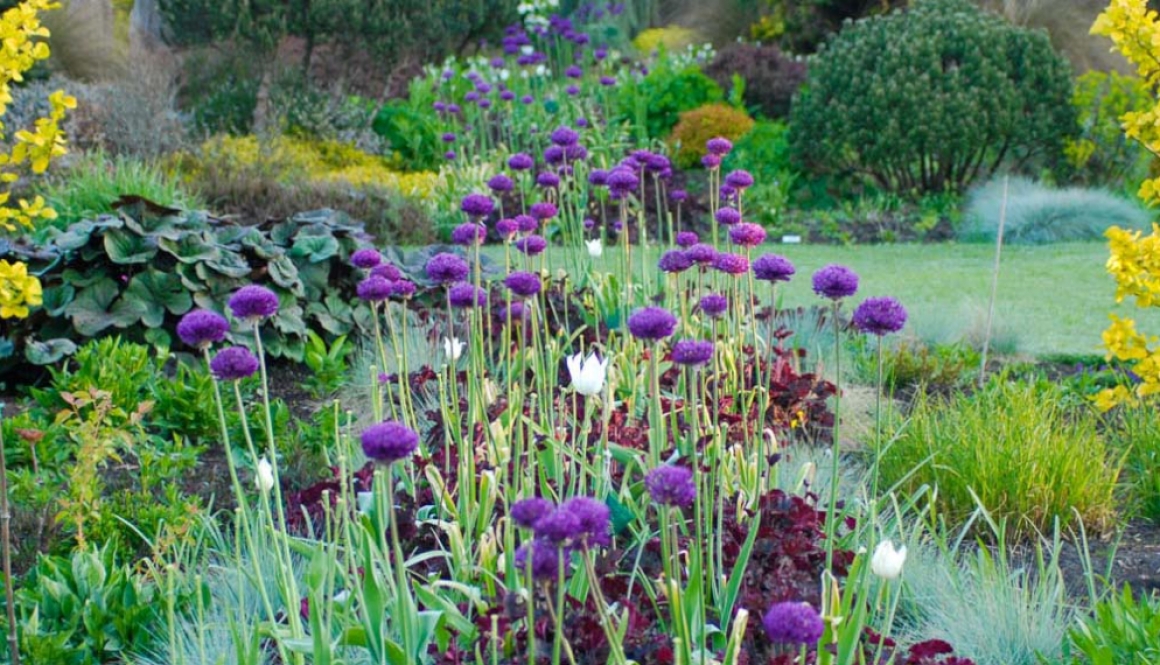
At Bressingham, and particularly at Foggy Bottom, Adrian has used Alliums to add drama to plantings of later flowering perennials and grasses. Shown above is a photograph of Allium ‘Purple Sensation’ planted amongst a ‘river’ of purple leaved Heuchera ‘Prince’ in the All Seasons Bed.
In your own garden, planting at least 3 plants not as a clump but spaced between other perennials makes for a bold show; try planting in a line or a semi-circle. It is normal for Allium foliage to die down quite quickly after flowering, so this is another reason to plant them amongst perennials and grasses. We particularly like Stipa tenuissima as a companion for any of these taller Alliums.
‘Purple Sensation’ is great…
… but who could resist ‘Globemaster’?
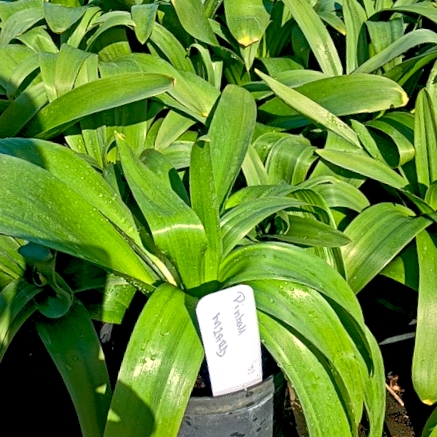
… or the newer ‘Pinball Wizard’?
Equally spectacular are Allium giganteum…
… ‘His Excellency’ …
… and ‘Gladiator’.
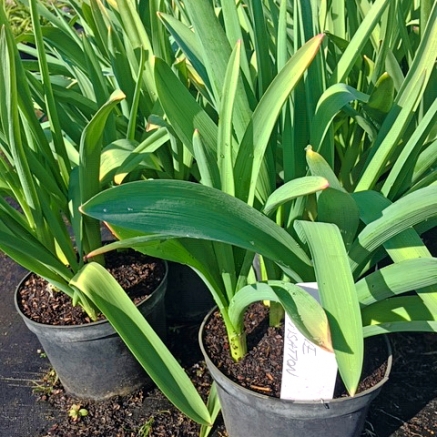
These last 2 images were taken this week just before Easter: Allium plants on the Bressingham Gardens Nursery, waiting for a home in your garden.
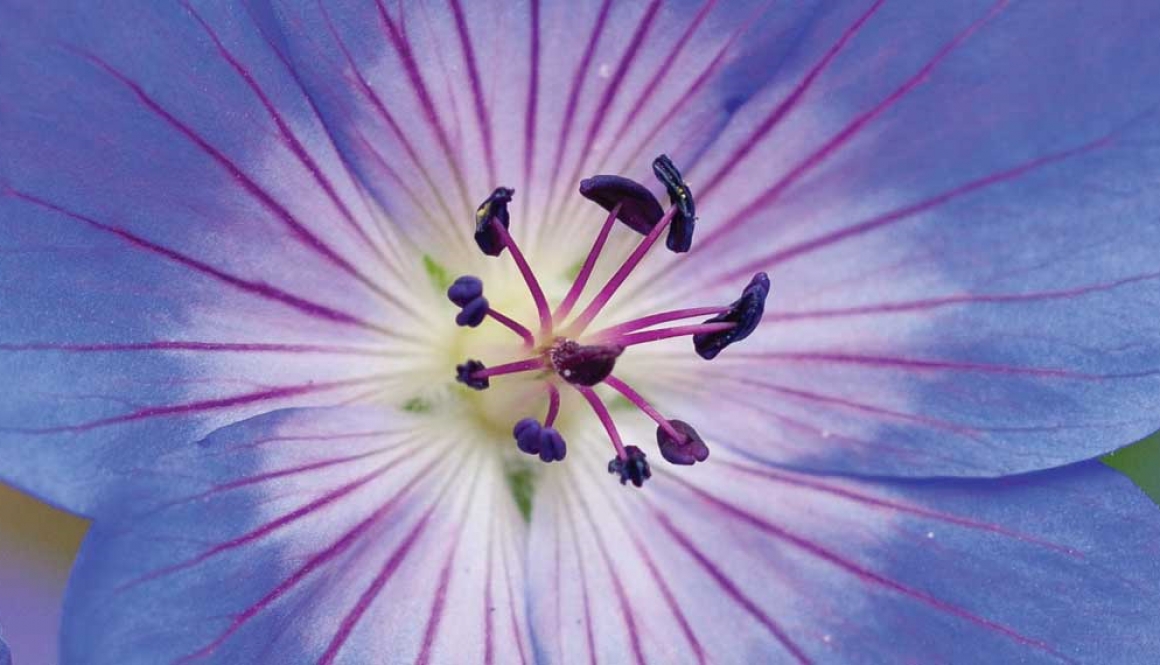
Geraniums are plants that can transform a garden or patio. And each of the top perennials in this post arose as chance seedlings, rather than through any commercial breeding – discovery was made only through sharp and observant eyes. If those individuals hadn’t spotted them, many gardens including Bressingham would be much poorer. Here is the lowdown, our ‘must read’ review…
First we have Mavis. What do we know about Mavis? Not much, except that her surname was Simpson. As a plant, she arose as a chance seedling in Kew Gardens around 1980 – so 2020 will be her 40th anniversary. To still be recommending a perennial 40 years after it was introduced must mean it has to be a good one…
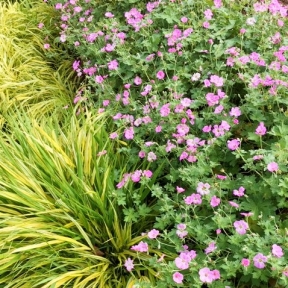
A perennial that flowers its heart out throughout the summer and into autumn. Small, grey-green leaves form a carpet of foliage, above which a succession of soft pink flowers continue week after week.
Best in a sunny situation with good drainage, and very good in a container or hanging over a wall, as here in the Dell Garden at Bressingham, next to Hakonechloa macra ‘Alboaurea’.
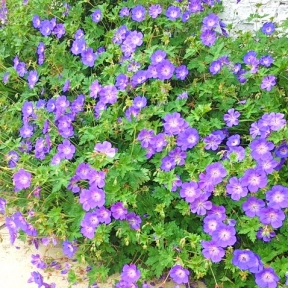
Secondly, we have Rozanne. What do we know about Rozanne? Well, here at the Bressingham Gardens we were lucky enough to get to know the real life Rozanne Waterer and her husband Donald, who lived in Somerset, where ‘Rozanne’ the geranium was ‘born’. Though a chance seedling which arose in their garden in 1990, the Waterers were knowledgeable enough to know this plant was something special. They thought it to be a hybrid between the early blue-flowering Geranium himalayense and the later summer-blooming Geranium x wallichianum ‘Buxton’s Variety’.
The Waterers were a delightful couple and were then both close to 80 years old. They contacted and entrusted Adrian Bloom and Blooms Nurseries to propagate their plant and get it on the garden market. It took a full 10 years from receiving the first plant, to giving trials and building enough stock through tissue culture to then launch ‘Rozanne’ at the RHS Chelsea Flower Show in 2000. 20 years later around 20 million plants have been sold across the world, and many gardeners have and still enjoy its great flowering performance each year.
Adrian Bloom called Geranium ‘Rozanne’ “the perennial of the Millenium” in 2000, and for sheer garden worthiness, is there any other contender? If you really think so, please send in your suggestions, with reasons, to ‘Perennial of the Millenium’, and send by old methods, in an envelope addressed to Bressingham Gardens Nursery, Low Road, Bressingham, Diss, Norfolk, England IP22 2AA!
Thirdly and lastly, we recommend Geranium ‘Azure Rush’, which has a rather different story … by 2005 many nurseries in other countries had been licensed to propagate, grow and sell Geranium ‘Rozanne’, and this was all handled by Blooms of Bressingham North America under the guidance of Gary Doerr. Donald and Rozanne Waterer had sadly died, but had at least received their first royalty payment and knew their discovery would be a success; payments then passed to their family.
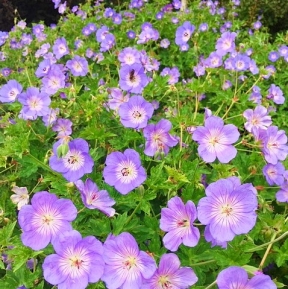
On the Nursery of zu Jeddeloh, near Bad Zwischenahn in northern Germany, a single plant was spotted in a batch of 10,000 plants of ‘Rozanne’ which looked different to the rest. It seemed to be lower growing and a lighter blue; it had arisen as a ‘sport’ during the propagation in the tissue lab. The excitement at finding this was slightly negated by the knowledge that zu Jeddeloh would not be entitled to any royalties. To add insult to injury, it was decided in America to call Rozanne’s daughter or sister ‘Azure Rush’, as opposed perhaps to the either of the zu Jeddeloh ladies’ names, Gertrude or Sabine. To a Californian, rush meant a rush to find gold … not Gold Rush, but Azure Rush?
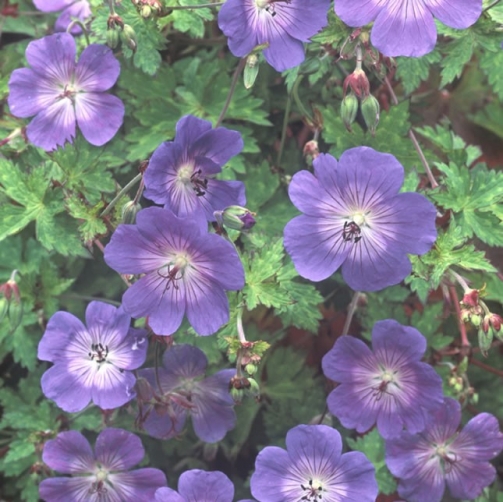
… Despite this, in our opinion ‘Azure Rush’ is every bit as worthy as ‘Rozanne’ as a garden plant, and can match the latter in flowering period, ease of growing, freedom of flowering and impact. It’s a great plant whatever its name, and once again we have it growing in several different situations in the gardens at Bressingham.
So when you do get to visit the Bressingham Gardens, do seek out these Geraniums. Or if you would quite like to enhance your own garden, patio pot or window box, why not wing an order to us online, so we can send you the above plants – or even something else?
“If there was only one snowdrop allowed to be in cultivation, I would have to choose Sam Arnott!” Adrian Bloom.
The Story of Sam Arnott…
Few gardeners may realize that we are in an era of Snowdrop Mania, and each year at this time so called Galanthophiles meet to view collections, exchange or buy newly found or bred varieties. Prices for rarities are edging up or over the £500 mark for a single bulb!
Gardens with masses of snowdrops are breathing new life, opening to the public to view these harbingers of spring. But which one would you choose for your garden?
Two Questions; Is there really much difference between them, and if I had to choose one for my garden what should that be?
Two Answers; The closer you look (probably on your hands and knees), the more difference you might notice between varieties of snowdrops. But in Adrian Bloom’s view, who now has several thousand plants spread through the Bressingham Gardens, and particularly in his own 6 acre Foggy Bottom Garden, for display, and fragrance, it’s difficult to beat the large flowered Galanthus S. Arnott.
There’s a history to this plant. Discovered as a seedling in his garden in Yorkshire in the late 19th century by keen gardener Sam Arnott, who recognised it as a robust, larger flowering seedling than most. Eventually it made its way as Arnott’s Seedling into other gardens, and was finally given the R.H.S. Award of Garden Merit in 1951, apparently then to be correctly (and impersonally) named Galanthus nivalis ‘S. Arnott’.
Fast forward to Adrian Bloom’s story – “I was given a clump by a nurseryman friend over 40 years ago, not knowing much about snowdrops, little aware of what a treasure and delight this ‘mother plant’ would bring to Foggy Bottom in winter”.
Over the past few decades Adrian has divided clump after clump of Sam Arnott, planted in meadow, lawn and woodland amongst trees, shrubs, grasses and perennials and planted Sam Arnott in other gardens! Now in early spring, wherever you look groups and clumps of sparkling white, fragrant flowers light up the garden.
The plants you will get will have come directly from the gardens at Bressingham, part of this long lineage going back to Sam.
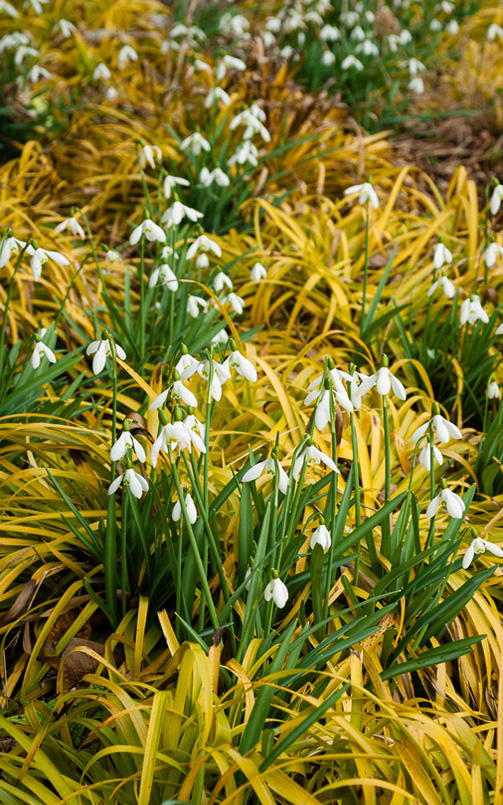
Adrian suggests you consider planting this spring in a moisture retentive spot in sun or half shade where they can be seen from your home. You might also consider planting with the black leaved Ophiopogon Nigrescens, ruby red winter foliage of Bergenia Bressingham Ruby, and for gold and yellow combinations, Acorus gramineus Ogon or Luzula sylvatica Aurea.
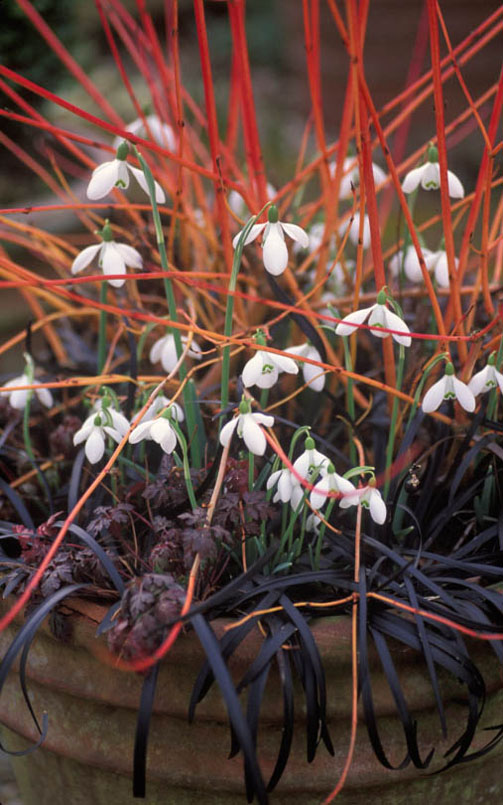
Galanthus ‘Sam Arnott’ with Luzula sylvatica ‘Aurea’ (left) and with Ophiopogon and Cornus (right)
We have an exciting opportunity for someone with administration, IT and social media skills to support the smooth running of our world-renowned gardens.
Working with the garden owner and liaising with other members of the team, tasks may include:
Typing email correspondence, memos, reports, etc.
Uploading posts to social media (Facebook & Instagram) and monitoring comments
Making amendments to website
Drafting newsletters
Filing digital images in image library
General administrative and PA duties for garden owner
Initially 3-6 hours a week on a self-employed basis; this could \’grow\’ into an important larger role with the Bressingham Gardens (Blooms Nurseries Ltd).
Person Specification
Essential Criteria:
Good written communication
IT skills including experience with Apple Mac, Microsoft Word, social media
Keen eye for detail
A methodical approach
Desirable Skills/Experience:
Knowledge of horticulture/plants
Experience of IT software including Adobe Lightroom, website content management systems (Wordpress), Dropbox
August is a strange month for gardeners… this is the month surely when you are allowed to sit back, admire your efforts, cut the grass (if you have any) and sit in your deck chair, enjoying the hum of nectar-seeking bees, the fragrance of your buddleia or roses. Undoubtedly idyllic, but perhaps seldom true – at least at the Bressingham Gardens!
Back in the day when there were fewer gardens and (except for those well-off people with gardeners) fewer garden owners, it was customary not to be concerned about summer colour in your garden, since you would be most likely away in the south of France for the whole month of August. One of our noted garden writers who shall be nameless suggested August “isn’t a month to bother about”…
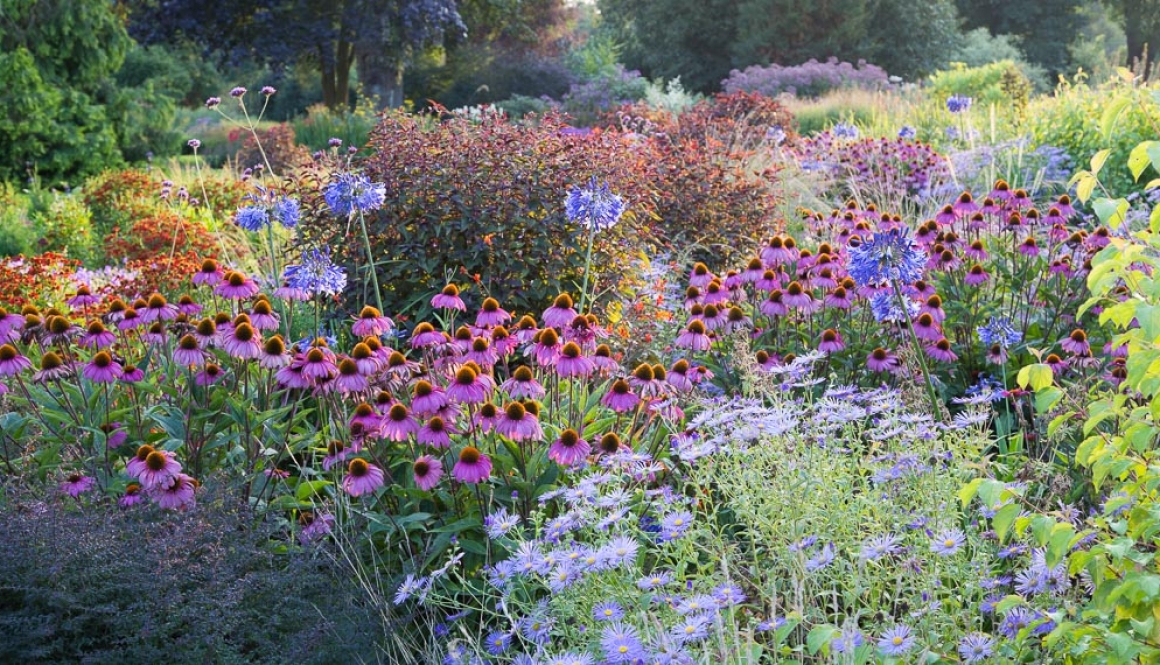
… But a visit to the Bressingham Gardens in August (a nice day out) will quickly show you how much colour there can be from perennials at this time of year. Alan Bloom was ahead of his time, not only in his creation of flowing island beds (no, the beds didn’t flow – but the style of planting did!). He collected many perennials originating from North America – gold-standard perennials like Heleniums, Heliopsis, Helianthus, Coreopsis, Phlox paniculata (over 100 cultivars), Rudbeckias and others. All flower in August; yellow perhaps predominant (although some strangely elitist gardeners refuse to plant these joyous plants in their summer garden since they follow some designer who didn’t like yellow, in all that blazing August sunshine…).
Crocosmia \’Spitfire\’
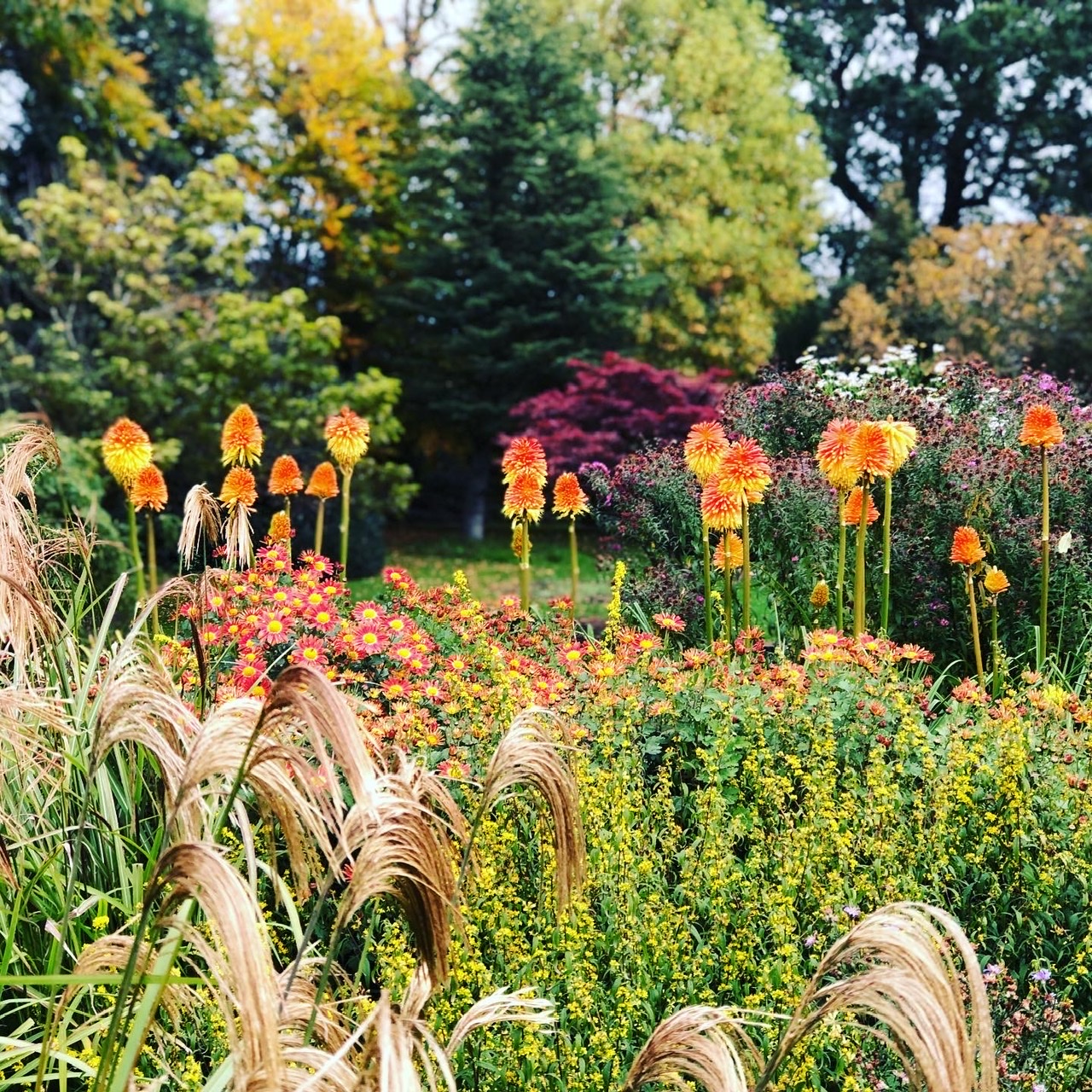
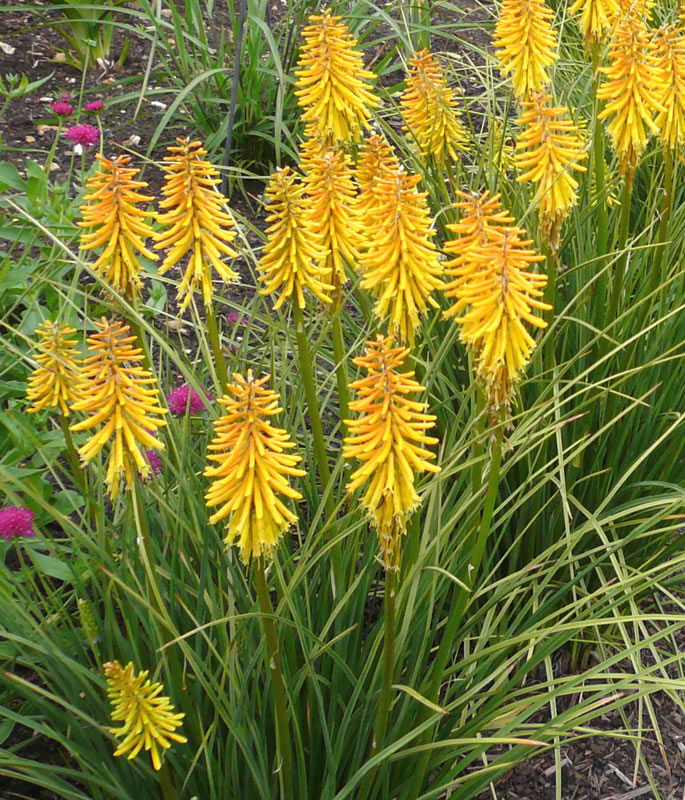
Kniphofia \’Bressingham Sunbeam\’
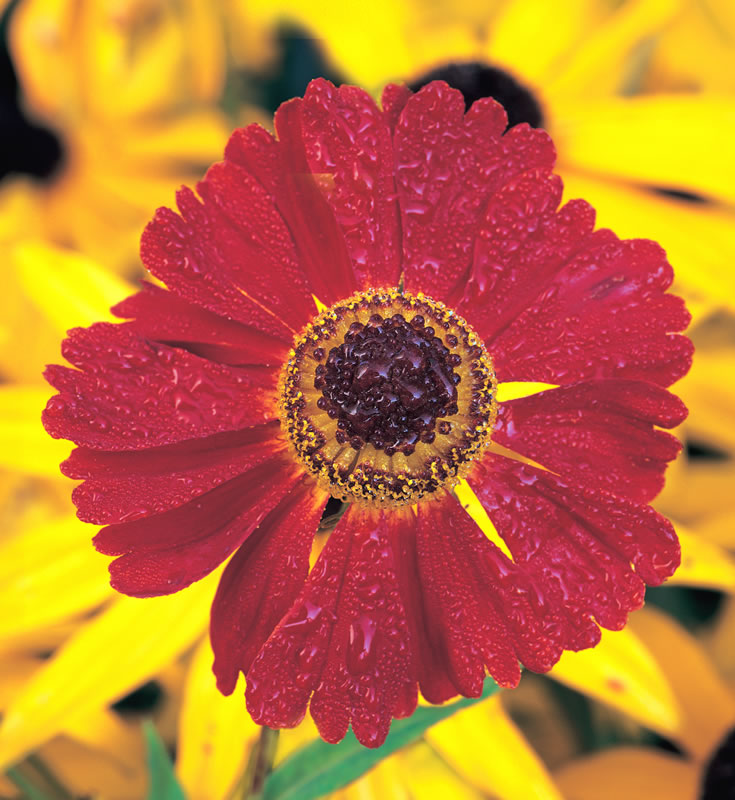
Helenium \’Bruno\’
South African Plant Treasures
So back to Alan Bloom, who also collected perennials with South African origins, many importantly adding other colours than yellow to the summer and August flowering period. Agapanthus, Crocosmia and Kniphofia are the three genera that stand out and Alan, with helper Percy Piper, soon started breeding species and cultivars of all these. Most gardeners will know Crocosmia‘Lucifer’, the most popular and widely grown of all – but not all know it was raised at Bressingham by Alan and Percy. ‘Lucifer’ and others such as ‘Spitfire’, ‘Emberglow’, ‘Bressingham Blaze’ and ‘Vulcan’ are all Bressingham introductions still widely grown today.
Today Jaime Blake, Alan’s son-in-law and curator of Alan’s Dell Garden at Bressingham, is continuing some fascinating selection and breeding (well – as Jaime modestly says, he does the organising, and the bees do the breeding!). Jaime has also continued with Kniphofias – his ‘Penny Rockets’ (available from our nursery online) was recently awarded the Award of Garden Merit in the Royal Horticultural Society’s trials. Several more selections with vibrant colours on free-flowering spikes are being assessed, knowing of course that there will be a need to stand out from other varieties by their vigour, balance and garden worthiness.
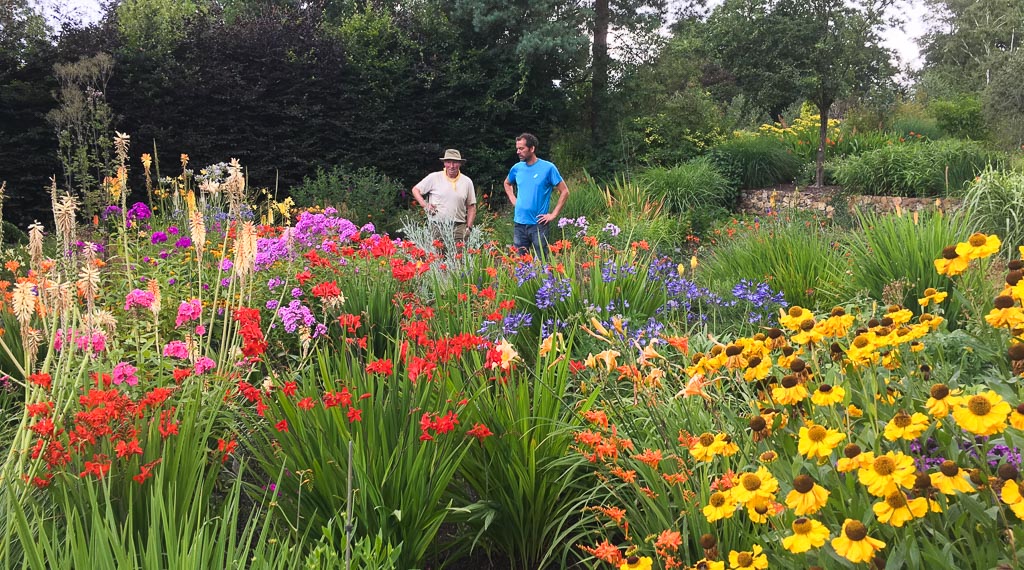
In the old grass tennis court created by Adrian in 1963, and long since unused, Jaime has in recent years put it to good use as a trial garden for new plants brought in and for testing those of his own breeding. Adrian (who took the above picture), Jaime and Jason were there on a summer’s day in early August looking at some selected hybrids of Crocosmia and Kniphofia; Crocosmia and Helenium in the foreground.
New plants will continue to be part of our offer. We have, with over 5,000 species and varieties of plants, such a wide gene pool to choose from, and gardening experience to always seek better – as well as demonstrate how our new plants can be used with others in our amazing 17 acres of gardens.
The summer colour in our gardens means August is as much a peak of interest as June and July… and September is pretty good too.
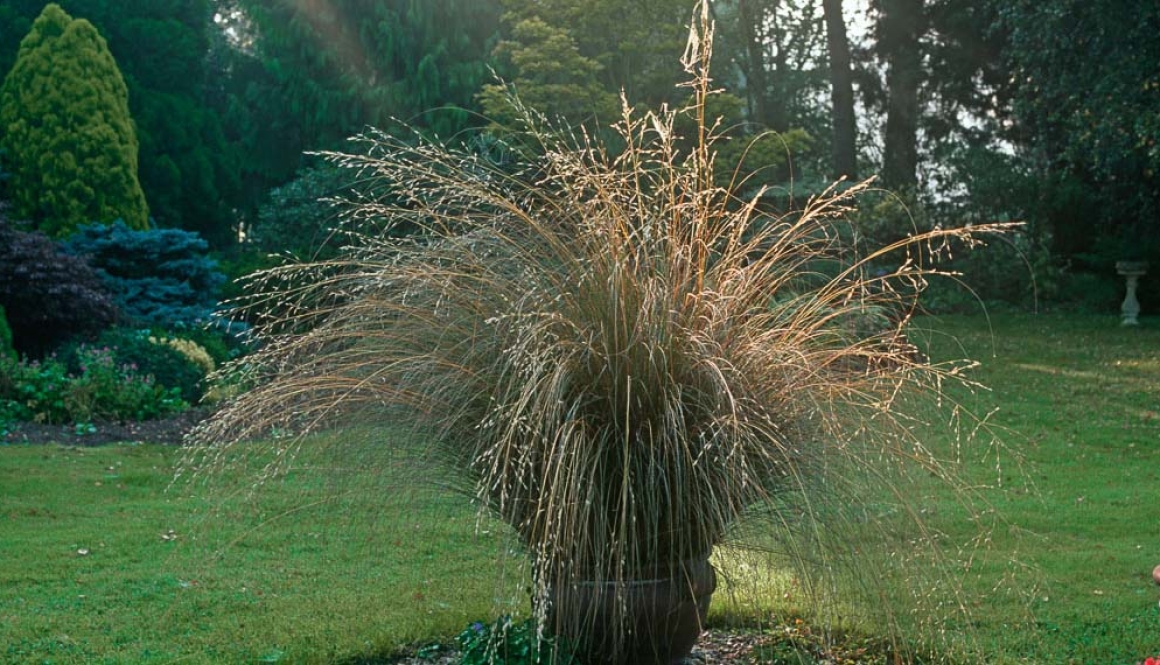
Image above: Chionochloa \’Rubra\’ planted in a container.
Perennials and grasses make great plants in containers, which Adrian Bloom has been experimenting with over many years.
The advantage with perennials and grasses is that if you choose plants that are hardy, they can be left outside (although pots rather than the plants may need some protection against frost). The plants will start showing interest early in the season and if chosen carefully continue to look attractive almost until the autumn frost. Here are a few ideas:
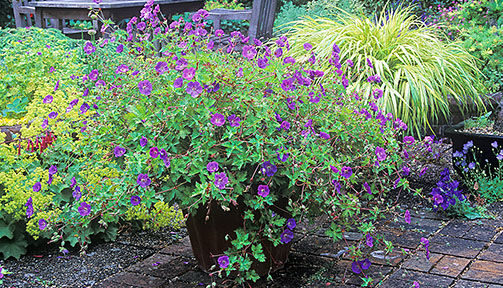
Geranium ‘Rozanne’ – you just can’t lose out with ‘Rozanne’, as whether it’s in the garden on its own, or as a river, or in pots and containers it takes quite a bit to beat its sheer flower power during the height of summer and on into the autumn once cut back. Here is a container on Adrian’s terrace, a 3-year-old plant.
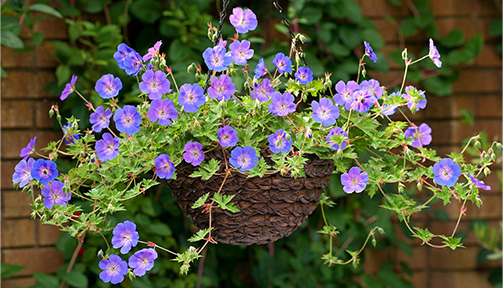
Although slightly more difficult to handle, is this image of a sport from \’Rozanne\’ called ‘Azure Rush’ in a hanging basket. It works pretty well but you need to have a large enough hanging basket and the plant must be kept well watered – and feeding if it goes into its second year, or even later in the season.
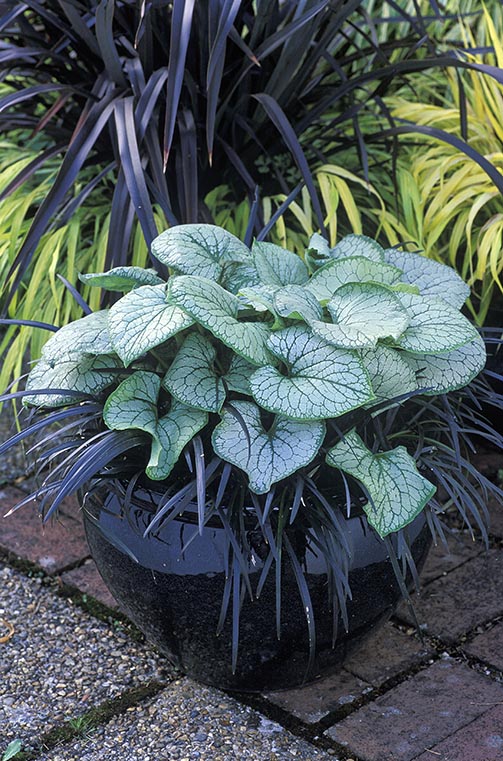
Ophiopogon planiscapus ‘Nigrescens’, the black-leaved member of the lily family is an extremely useful partner for summer and other seasons too. You can see it here in combination with Brunnera ‘Jack Frost’, which earlier in the spring had pale blue forget-me-not flowers and now cut back in May has made a display with its attractively marbled leaves. A good substitute for a hosta, as slugs seem less interested.
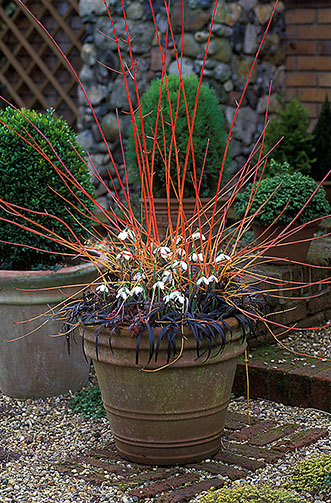
If you want something for winter interest, what could be more showy than this larger container showing the stems of Cornus sanguinea ‘Midwinter Fire’ in early February, underplanted with Ophiopogon and splashed with the fragrant white flowers of our favourite snowdrop, Galanthus ‘S Arnott’ (it seems a pity that such a great snowdrop has such an uninspiring name – we could suggest ‘White Wonder’, or ‘Arnott’s White Wonder’!).
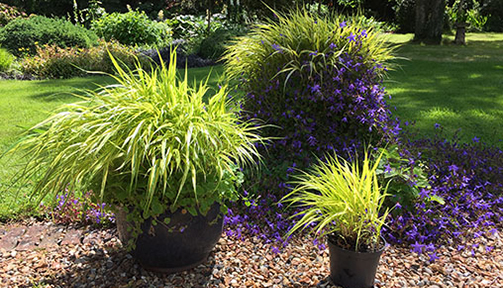
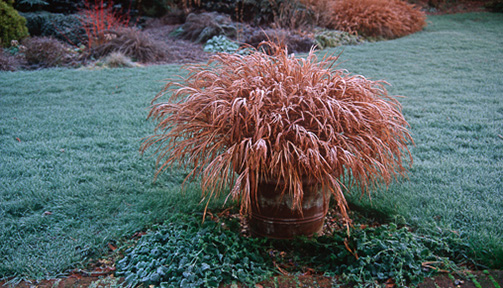
This picture of Hakonechloa macra ‘Alboaurea’ in 3 containers tells a story. The smaller one on the right foreground is a 2 litre plant straight from our Bressingham Gardens nursery. This is ideal to pot on this summer into a larger container such as that on the left, which has been in a pot for 2 years with Campanula ‘Blue Waterfall’ beneath. Behind is an older specimen in a larger container, amongst Campanula porscharskyana, which has the capacity to climb up the pot and into the foliage of the Hakonechloa. This is quite spectacular, but as soon as the Campanula has finished main flowering it should be cut back to the base allowing the Hakonechloa to drape gracefully over the side.
This image shows the still-attractive foliage in late autumn as it has died back. The plant is quite happy to overwinter in a container unless we get below -10 C for more than a week or more, which hasn’t happened here for many years. The old foliage can be cut back to the base in March before new growth starts.
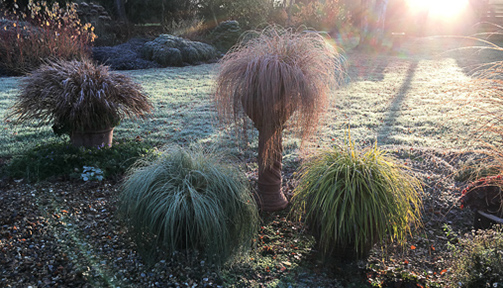
Imagine this view out of your kitchen window on a frosty winter’s day. These ornamental grasses are in containers and have made a lot of growth during the earlier part of the year. The three on the right are forms of Carex (l-r: Carex ‘Frosted Curls’, the plant with the long tassels is Carex comans ‘Bronze’ form, and Carex ‘Everillo’), all evergreens, whilst the plant on the left is Hakonechloa macra ‘Alboaurea’, with growth that has become dormant but leaving the grass to reflect the autumn and winter weather.
Perennials and grasses should be grown in a reasonably open compost, ideally with sufficient fertilizer to last a full growing season. For the following years add a slow- release granular fertilizer to cover each season unless you have a drip-feed fertilizing system. Getting any well-established plant out of some containers can be a problem. Lining with polythene prior to potting may help, as perennials and grasses will need dividing and re-potting every few years. Better still is to select containers that do not curve in at the top, in other words straight-sided – whether square or round.
Containers are in theory a moveable commodity, but the larger they get the more difficult they become. We use a sack barrow, which helps, but you need two people to help manoeuvre your containers to a new position. As ever, plants in containers need watering—and while they should not be too wet, perennials and grasses should never be allowed to dry out in the summer. You can almost never overwater a breathable terracotta pot, but other materials such as plastic or steel will need ‘crocks’ at the base to allow water to drain through the holes at the base, before compost is put in.
You can buy many of these plants from our nursery online.
At present it seems there are two extreme attitudes when it comes to conifers: love or hate. Those who love them may grow only conifers and perhaps little else, and those who hate them will not grow them at all. However, at the Bressingham Gardens we feel that if you meet the two attitudes half way, you will see that conifers can benefit almost any garden.
Whilst conifers may have fallen out of fashion in recent times, perhaps the apparent increase in conifers seen in the show gardens at this year’s RHS Chelsea Flower Show means they may be catching on again? Naturalistic pines, the distinctive monkey puzzle and clipped yews all featured, demonstrating the structural impact that conifers can give amongst mixed plantings.
Here at the Bressingham Gardens, and particularly the Foggy Bottom garden, you will see that conifers can lend much more than just a structural component to gardens. We hope to show our visitors, to both our website and gardens, the diversity amongst conifers and the many ways they can enrich a garden.
Scale
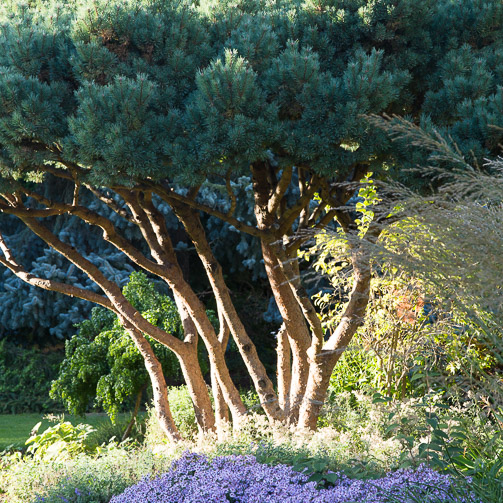
Some gardeners may be reluctant to plant conifers, associating them with the notoriety of un-pruned and ill-placed Leyland cypress hedges. But if the right conifer is selected, it can offer scale and structure for any garden.
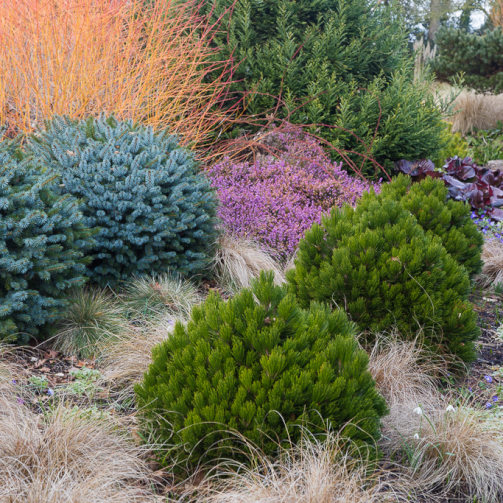
The image on the left shows dwarf conifers in the Winter Garden – Pinus heldreichii \’Smidtii\’ and Picea sitchensis \’Tenas\’. The Pinus \’Smidtii\’ plants are over 25 years old.
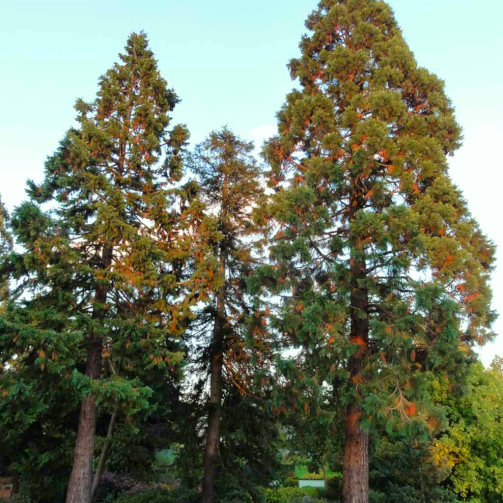
The image on the right shows Sequioadendron giganteum, which may not be a suitable size for many gardens, but it makes an imposing presence in Adrian\’s Wood.
Form
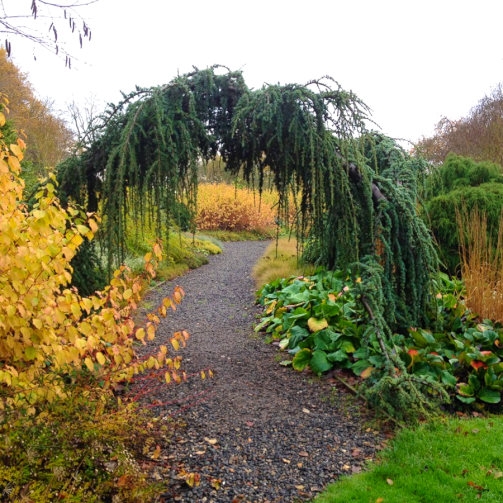
Conifers come in an array of forms – columnar, pendulous, rounded, prostrate. In some varieties
this form can be enhanced with training and pruning.
The image right of the Winter Garden shows how the naturally weeping Cedrus atlantica \’Glauca Pendula\’ has been trained to create an arch.
Some conifers, such as this Pinus sylvestric ‘Lodge Hill’ (left) respond well to pruning of lower branches. This
opens up the view to create glimpses of the garden beyond.
Colour
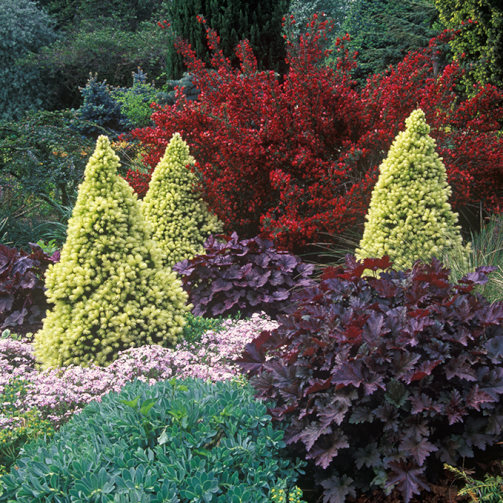
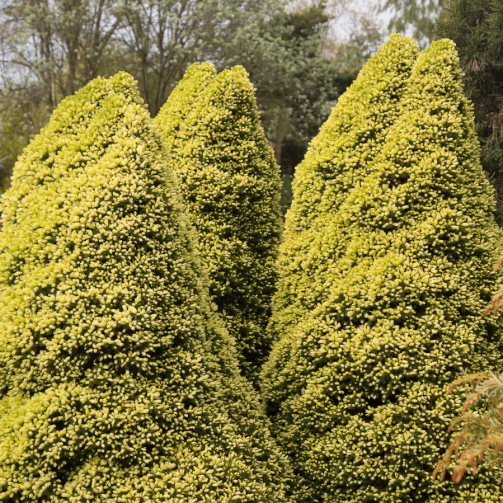
Some conifers offer year-round attractive colour. And some, like this Picea glauca \’JW Daisy\’s White\’, can offer a spectacular seasonal change in colour. This \’dwarf\’ conifer (shown here at 5 years old and 20 years old) bears creamy-white shoots in late spring, toning down to pale green later in the season.
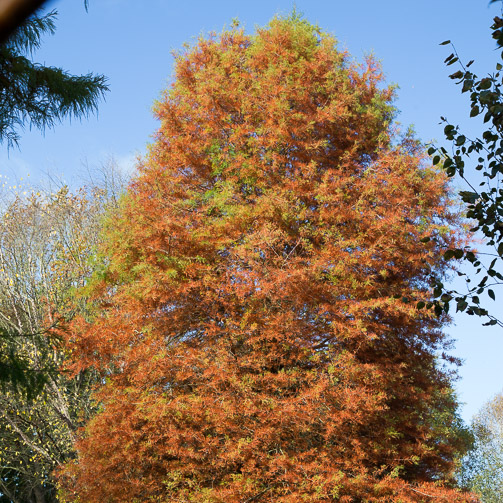
Whilst most conifers are evergreen, deciduous conifers such as Ginkgo biloba (left) and Taxodium distichum (right) offer wonderful autumn colour before they drop their foliage.
Detail
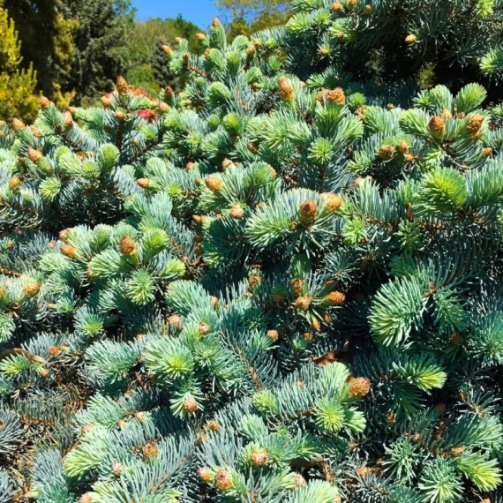
Conifers can, as this image (left) of Picea pungens \’Glauca Prostrata\’ shows, have a dramatic effect in close-up as you see the grey-blue shoots breaking out of their shell-like capsules – spectacular in spring!
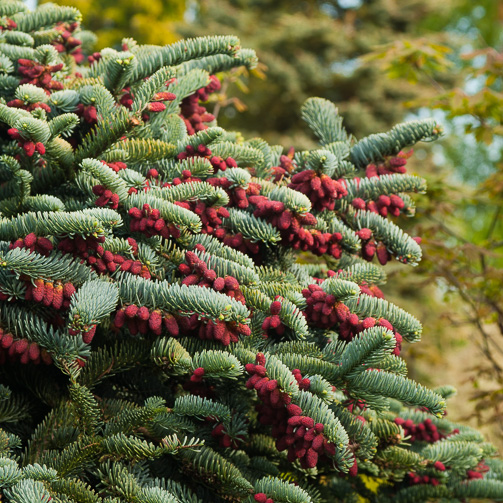
The image on the right shows the vibrant red flowers on Abies procera.
Winter interest
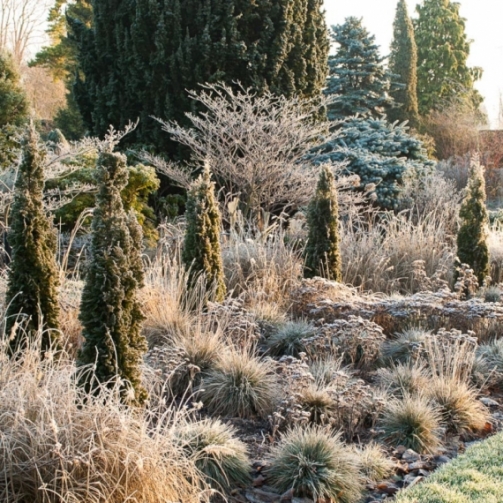
Conifers can add wonderful colour and structure to a winter garden. The image on the left shows Thuja occidentalis ‘Degroot’s Spire’ planted to provide vertical accents amongst perennials, sparkling in the frost.
Some also change colour in the winter, such as this Pinus \’Carsten\’ (right), a compact selection of Pinus mugo.
If you feel inspired to learn more about, and perhaps grow, conifers, you can read Adrian Bloom’s comprehensive book Gardening with Conifers.
You can also visit the Bressingham Gardens and see the above conifers, and many more, for yourself. In addition to our main season opening, you can see conifers during our winter opening, from mid-February 2020.
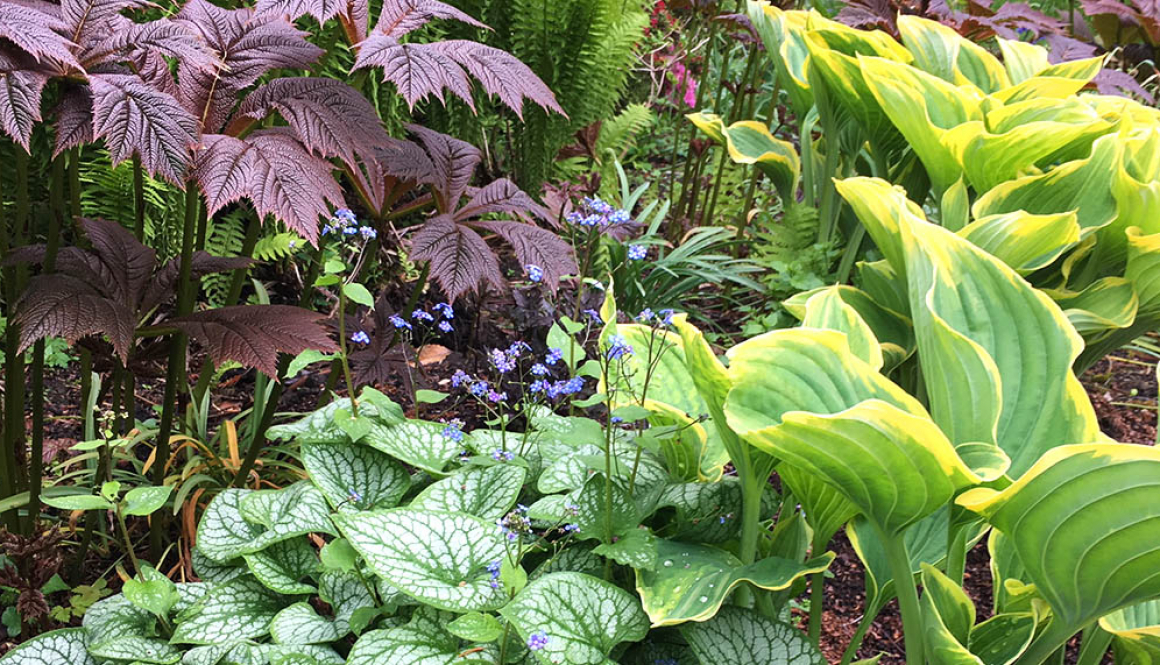
Foliage is dominant in the above spring shot of perennials combined together in semi-shade in Foggy Bottom. From L-R; Rodgersia podophylla, Brunnera ‘Jack Frost’, Hosta ‘Sagae’
The Upside
It seems gardening comes alive in the media as we approach the RHS Chelsea Flower Show 2019. Stories of that iconic show abound as the excitement and extensive media coverage increases.
We read about what’s ‘on trend’. Houseplants – why not? About time, although they don’t stand a chance if overwatered – or not watered…! The Guardian recently reported in an article by the aptly-named Zoe Wood, “Rockery all over the wold: stone gardens in style again”, backing it up by adding, “A rockery revival is under way as a new generation of gardeners, inspired by Instagram, build the features, which had been deemed old-fashioned.” That seems more like a story than a serious possibility – we suggest the future may not be so rocky after all!
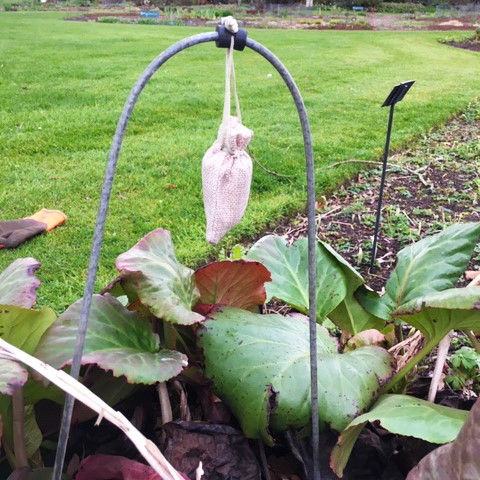
Soap is placed near plants to deter deer
The Reality
We could discuss, but we live in the real (and at present, the busy) world of gardening, dealing with not only some wonderful plants in the 17-acre Bressingham Gardens, but also some challenging weeds (goose grass the main enemy at present!) and wildlife such as rabbits, pigeons and deer, not to mention crows, moles and grey squirrels. We use tree guards and chicken netting against deer and rabbits and soap to keep the deer away from roses and other plants – but now magpies and crows have taken a liking to the soap! So who wins?
By the time we get to June it will probably be a ‘draw’… But we try to be friends too, and the gardens are richer for birds and animals including buzzards, owls, woodpeckers, as well as the more common creatures. Ducks and, recently, Canada geese, nest near the Foggy Bottom pond. Foxes and stoats are around but are seldom seen.
Enjoy your garden…
… But realise that unless you have a gardener or landscaper doing it all for you, you have to garden first. Weeding, pruning, planting, perhaps cutting grass, edging borders etc. Convince yourself (if you need to) that it will all be worth it, and put up with a few aches and pains – it’s both exercise AND therapy.
Use and be guided if you can by your experience to date, advice from fellow gardeners, and websites which are helpful. Beginners ideally should not be tempted by showy plants offered seasonally in some garden centres. Planting for success is more rewarding if you go for the tried and tested plants which will establish more easily.
We will gradually be building sound advice online, uploading excerpts from Adrian Bloom’s popular book Blooms Best Perennials and Grasses – now sadly out of print. We can offer you Adrian’s wide experience in gardening here in the UK as well as in North America, gained from his Foggy Bottom garden as well as small and large gardens elsewhere.
We want you to have success too, and hope you are already a Bressingham Gardens Nursery customer. If so, you’ll know the quality of the plants that Jason Bloom and his small team grow and sell in 2 litre pots. New (and many older) customers order three or four times a year, so pleased are they with the top quality plants.
“I am very impressed with the speed of delivery and the excellent quality of plants supplied. Thank you so much. I am especially happy with your use of mostly recyclable packaging too.”
“Stunning … I am absolutely thrilled with the plants. I have ordered from numerous nurseries online but these stand out for their quality. Incredibly carefully packaged. Marvellous in every way.”
Norfolk & Norwich Horticultural Society and new president Adrian Bloom announce new mission
In his new role as President of Norfolk and Norwich Horticultural Society (NNHS), Bressingham Gardens owner Adrian Bloom will be working on the 2019 initiative to reach out to a wider audience with a new, more inclusive mission.
To launch this mission, Adrian will be giving a presentation followed by a forum to discuss the present and future of gardening and horticulture.
The event will take place on the 27th April 2019, 6.30pm, at the John Innes Conference Centre, Norwich and is open to all. Places cost £10 per person, including welcome drinks and an opportunity to engage with local gardening organisations before the talk.
NNHS was formed in 1829, one of the earliest horticultural societies in Britain. Since then the society has organised yearly shows and garden visits and helped with the education of the general public in gardening.
On his appointment as President, Adrian said: “NNHS have a long history and proud place in horticulture. With primarily volunteer help, the intention of the “Gardening for Everyone” mission is obvious, but it will take time to achieve. However, with support and close cooperation with other horticulturists, keen gardeners and organisations we hope NNHS can act as a catalyst to encourage more people into gardening at all levels.”
The Talk
LOOKING BACK: THE FOGGY BOTTOM STORY
Adrian Bloom is presenting in a talk some of his own experiences in creating Foggy Bottom, his own 50 year old 6 acre garden, now renowned for year round colour, and featured in books and on many television programmes over the years. Since the garden began in 1967, Adrian has been ‘on trend’ with innovative plantings of conifers and heathers, ornamental grasses and perennials, plant combinations and rivers, as well as the always in vogue: container grown plants. Adrian’s talk will also highlight some of the most reliable plants and will give recommendations, as well as plants for containers.
LOOKING FORWARD: A FORUM ON THE FUTURE OF GARDENING AND HORTICULTURE
A grandiose subject of course, the future is ongoing … How can we inspire?
The benefits of gardening could be briefly described as offering activity for mind and body, include edibles and ornamentals and plants in nature and the wild, as part of the living world of insects, birds and animals, the environment. A potential for lifelong interest, creativity and therapy for all… So why are there fewer gardeners by far than there used to be? Perhaps many reasons – space (or lack of), time, no childhood connection, too many distractions and competition for the consumer’s attention.
So what, if anything, can be done about it? We can’t halt societal changes but gardeners and horticulturists can have a voice. Building needs to be done from the top and the bottom, young and old (…and particularly middle aged!).
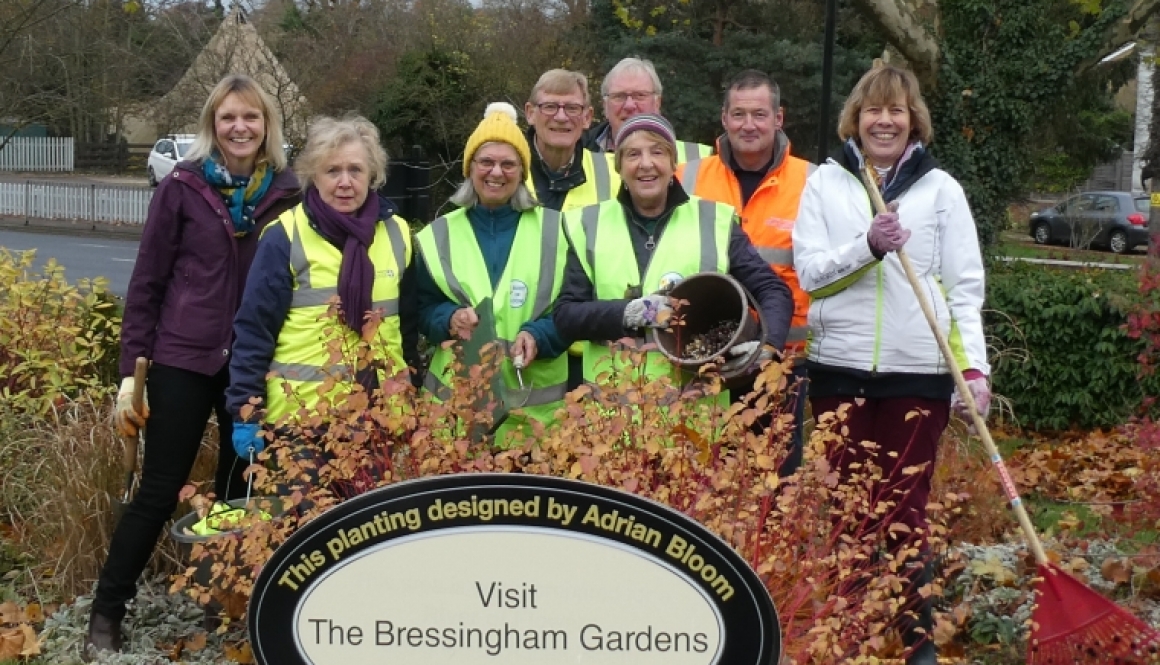
The Bressingham Gardens has donated £350 worth of bulbs to Bury St Edmunds. The ‘River of Flowers’ on the Tollgate roundabout is part of the Bury in Bloom display that won Bury St Edmunds a gold medal in the 2016 Britain in Bloom competition. The plants for eye-catching year-round display were donated by The Bressingham Gardens, designed by Adrian Bloom, and are maintained by local volunteers.
Pictured above is Bury in Bloom Co-ordinator Melanie Lesser (right) with the volunteer team in good spirits after planting over 1000 bulbs.
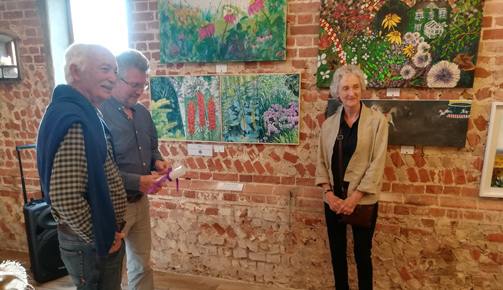
This September weekend was the second of its type following last year’s 50th anniversary of Adrian Bloom’s Foggy Bottom garden. Apart from there being 17 acres of gardens which look as good in September as they do at any time of the year, The Bressingham Gardens held for the first time an art competition involving artists mostly from Norfolk and Suffolk, who were approached to come to the gardens during the summer of 2018 to find inspiration for artwork that was displayed and judged this past weekend. There were around 72 entries on display in the High Barn at Bressingham, which is used for weddings and events.
The winner of the art competition was Allan Williams from Wickham Market, chosen unanimously by the three judges. Allan said that he really wanted to put his all into this painting and took hundreds of photographs of Bressingham before developing his associations which he felt represented “the amazing gardens”. The runner up was local artist Vivienne Weeks. The prize was for Mr Williams and his wife, family and friends to stay three nights at Bressingham Hall, which is open for accommodation for wedding parties and holiday lets.
By way of an experiment and to encourage horticultural societies and garden clubs to increase their activity using plants, the results of the first ‘Pot Off’ competition were held at The Bressingham Gardens. Members of different horticultural societies entered displays of garden plants in attractive and suitable containers. These were on display during the Inspiration Weekend and three judges awarded prizes of plants from the Bressingham Gardens nursery. The winning society was Loddon & District Horticultural Society.
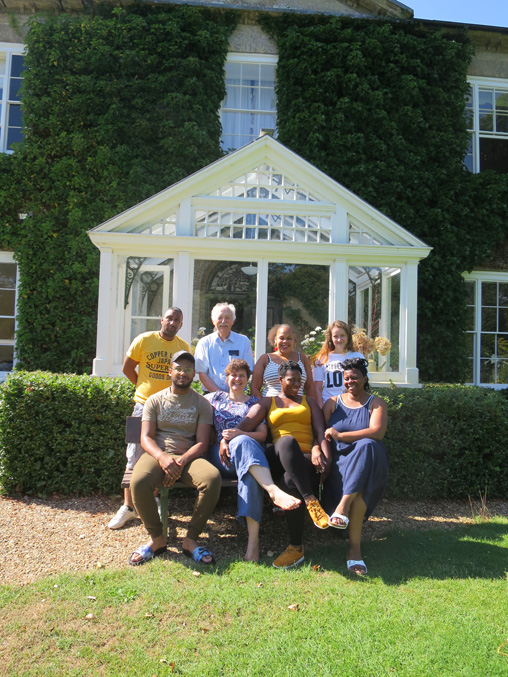
The lucky winners of the Bressingham Hall 3-night stay prize draw were Tamar (seated second left in the front row) and her group of Unique Children’s Home staff, pictured with the Bressingham Gardens owner Adrian Bloom (back row second left) on a very warm summer’s day this week.
Tamar is the lead psychotherapist at Unique Children’s Home in Muswell Hill, North London, which offers care and respite for troubled young people from ages 11 to 18 who are cared for 24 hours, 365 days a year by about 20 members of staff.
The prize win offered the children’s home staff the opportunity to enjoy wonderful quiet scenery in Norfolk countryside in the relaxed environment of the Bressingham Gardens.
Tamar said of the group’s visit, “Words cannot express the delight and joy our team experienced at Bressingham. From the beautifully appointed home to the breath taking gardens we spent three days in surroundings that allowed us to relax, let down our guards and actually connect to and learn from each other. I cannot overstate Mr Bloom’s brilliance in the grounds nor the detail that Ms Hodgson has paid to the hall. What an honour it was.”
This American oak (Quercus rubra) seedling (above) was brought back from New England by Adrian some years ago. Collected at Walden Pond, Massachusetts. It is now a 20ft tree and has amazing autumn colour.
As we have developed more autumn colour over the years, we will be extending the opening of the gardens until 12th November 2017 – keep an eye on our Visit Us page for further details.
Here are some of the fantastic comments we have received from autumn visitors –
“Beautiful planting and glorious autumnal colours.” – Tracy & Isla, 8th October 2017
“Wonderful autumn colours and a fascinating range of conifers.” – Kate, 26th October 2016
“Absolutely spectacular – the different types of grasses and the mixtures of textures and colours are brilliant!” – Ana, 27th October 2016
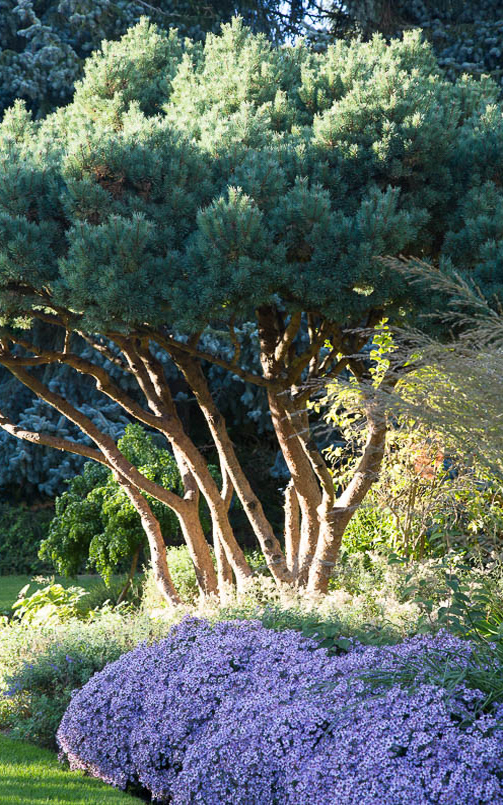
In October the late asters put on quite a show in the Dell Garden and Foggy Bottom. This compact form is called ‘Small-ness’, which is featured on our nursery pages. Behind is the striking form of Pinus sylvestris ‘Lodge Hill’ (full story in Adrian Bloom’s Gardening with Conifers).
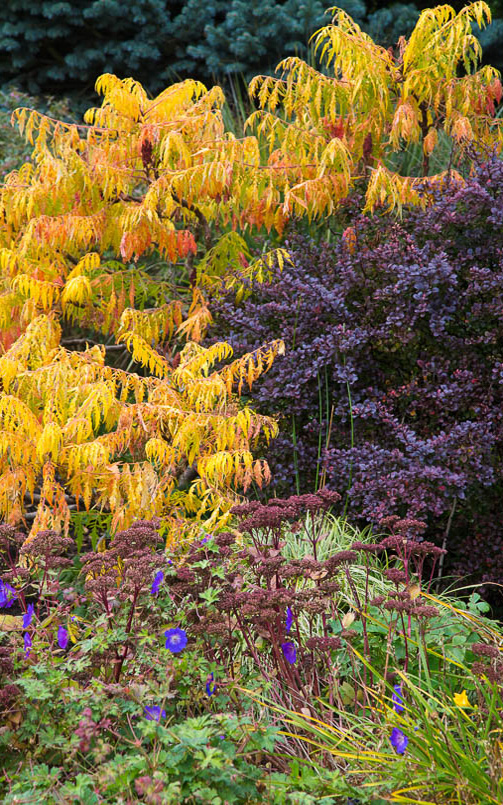
Summer-long contrast … continues into autumn. In Foggy Bottom in mid-October Geranium ‘Rozanne’ in the foreground is finally losing energy in flowers, but the golden-leaved Rhus typhina ‘Tiger Eyes’ and purple Berberis thunbergii ‘Dart’s Red Lady’ will intensify in colour before leaves drop.
Late-flowering agapanthus are still green, contrasting against Molinia caerulea on an autumn day.
New plantings of this Acer rubrum ‘Brandywine’ are bound to be an autumn hotspot on the pathway between Adrian’s Wood and Foggy Bottom.
Still leaves hanging on in early November on the striking specimen Acer palmatum ‘Atropurpureum’ and the fading perennials and grasses still remain attractive until Head Gardener Jaime Blake starts to cut back later in the month.
One of the little-noticed but beautiful trees in Foggy Bottom are the two specimens of Quercus frainetto, the Hungarian oak, near Matt’s summerhouse and the lower pond. Here the leaves mix with golden maples to form a carpet.
Where did the name Foggy Bottom come from? It’s a bit more of a story than you might think! Adrian tells the story in the early chapters of one of his early books;
‘I first came across the name Foggy Bottom when working on a nursery in the USA in 1959 and delivering plants to a small plant centre there close to Washington DC and Langley, Virginia. The name stuck with me until we built our new home, slightly above the low meadow, which draws the mist and fog to it many times a year.’
What’s in a name?
Where did the name Foggy Bottom come from? It’s a bit more of a story than you might think! Adrian tells the story in the early chapters of one of his early books;
‘I first came across the name Foggy Bottom when working on a nursery in the USA in 1959 and delivering plants to a small plant centre there close to Washington DC and Langley, Virginia. The name stuck with me until we built our new home, slightly above the low meadow, which draws the mist and fog to it many times a year.’